








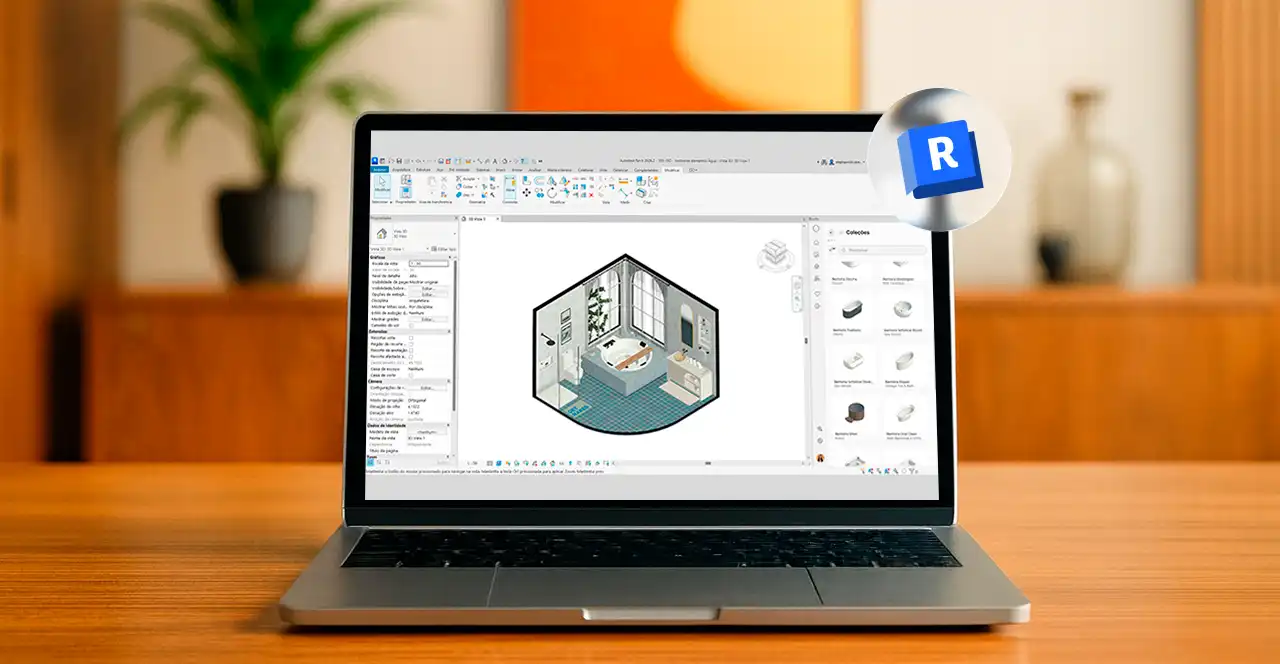

Choosing the right software for modeling is a crucial step for any architect starting a project with BIM (Building Information Modeling).
That’s because there are only a few high-quality programs designed specifically for BIM modeling, which makes the choice even harder for professionals.
Many only know Revit — understandably, since it’s one of Autodesk®’s most popular tools worldwide — but there are others, such as Archicad, Edificius, BIM 360, among others.
Just because Revit is one of the most well-known tools in the BIM methodology doesn’t mean you must choose it.
So, to help you finally decide on the best BIM software for your projects, Blocks has prepared this article.
Shall we get started? Enjoy your reading!
What is BIM software?
First, let’s clarify the central point: BIM. This methodology, known as Building Information Modeling, is the foundation for certain types of software, like Revit.
BIM software is nothing more than a program that supports this methodology — like Revit, Archicad, BIM 360, and others.
Unlike CAD programs, which create drawings with lines and arcs, BIM software generates a smart, parameterized 3D model. But what does that actually mean in practice?
It means that every element you draw, from a wall to a pipe, is not just a geometric representation. It’s an object full of data.
For example, imagine a wall: in BIM, you can know what it’s made of, its dimensions, fire resistance, cost per square meter, and even its maintenance schedule.
On top of that, in the BIM methodology, the entire project is interconnected. If you change the height of a wall, for example, the software automatically recalculates and updates every related element to remain compatible.

Bárbara Pavanello
CEO | Blocks®
“The real secret of BIM is not mastering a single program — it’s understanding the methodology itself and knowing how each tool fits into your creative process. Remember, choosing your software is only the first step. Analyze your preferences and design style in depth, and from there, pick the BIM software that best fits your daily work.”
The most popular BIM software
One of the first things you need to understand when choosing the right program is that there’s no single BIM software that’s perfect for everyone.
The best choice depends on your field (architecture, structural engineering, MEP, etc.), your team size, project complexity, and even the standards used by your partners.
In other words, you need to consider several factors to determine which BIM software meets your needs. That said, some big names are:
1. Autodesk Revit

Starting with the industry giant, we have Revit, a software developed by Autodesk® that is undoubtedly one of the most popular and widely used BIM tools in the world.
In Brazil, it has a strong presence, and its main strength is multidisciplinarity: in a single workspace, you can develop both architectural and MEP (mechanical, electrical, and plumbing) projects.
It’s ideal for firms of all sizes looking for an “all-in-one” solution and needing compatibility with other Autodesk tools, such as Navisworks or Autodesk Construction Cloud.
2. Archicad

Archicad is one of the favorites among architects due to its more intuitive interface and design-focused workflow.
Historically, Archicad held a pioneering role in the BIM concept and has always prioritized the architect’s experience.
Many professionals report that modeling and documenting in Archicad feels more like the act of designing, with freer and more flexible creation tools.
It’s ideal for architecture firms that prioritize the conceptual phase and want software with a gentler learning curve.
3. Trimble Tekla Structures

When it comes to structures, Trimble Tekla Structures is a benchmark among BIM software with a specific focus on engineering.
With a high level of detail (LOD 400), Tekla can precisely model complex steel, concrete, and timber structures.
As a BIM-based tool, it was designed to be extremely detail-oriented, providing all documentation required for manufacturing and assembly.
This makes Tekla an excellent choice for structural engineers, steel fabricators, and precast manufacturers whose focus is fabrication-level detailing.
4. Bentley Systems (e.g., OpenBuildings Designer)

Also in the engineering field, Bentley Systems is a strong contender, dominating the large-scale and complex infrastructure project sector.
This BIM software offers robust solutions for managing massive project data, such as highways, railways, ports, airports, and industrial plants.
A major differentiator is its interoperability and ability to integrate geospatial project data across the team.
It’s perfectly suited for large engineering firms and government agencies that handle complex works.
5. Nemetschek Vectorworks

Vectorworks is the “Swiss Army knife of design” thanks to its extensive feature set — from 2D drafting to 3D modeling and BIM.
This versatility has made it a multidisciplinary BIM software, serving not only architects but also interior and landscape designers.
With its user-friendly interface for those less familiar with the BIM world, it’s a flexible option for various professionals.
How to choose BIM software
Here’s the strategic and decisive part of our article: choosing the BIM software that aligns best with your workflow.
This is not just a purchase; it’s an investment in your future. So here are five crucial tips for making your decision.
1. Diagnose your real needs

Before exploring market options, look inward and conduct a detailed needs assessment. Consider these questions:
- Target audience: What disciplines do we cover? Are we an architecture firm? Do we handle complementary projects (structural, electrical, plumbing)? Does the tool need to support all of these areas in an integrated way?
- Project level: What’s the scale and complexity of our work? Do we focus on small residential projects, large commercial buildings, or infrastructure works?
- Partnerships: Who are our main partners? Which firms and professionals do we often collaborate with? What software do they use? Will compatibility be critical?
- Current bottlenecks: What are our biggest challenges? Do we spend too much time on quantity takeoffs? Is project coordination a nightmare? Do revisions create excessive rework? The ideal software should address these problems.
By answering these questions, you’ll get a clear picture of your needs and be well on your way to selecting the perfect BIM software.
2. Consider the ecosystem and interoperability

Remember: no software works in isolation. Your success with BIM will depend on how well your main program integrates with others.
Evaluate the vendor’s ecosystem. Companies like Autodesk offer a suite of interconnected solutions, which can be an advantage in design workflows.
If you work with partners who use different tools, check if the software supports openBIM and offers strong IFC (Industry Foundation Classes) compatibility, one of the top BIM interoperability standards.
3. Assess the learning curve and training availability

As the saying goes, the most powerful tool in the world is useless if you don’t know how to operate it.
Therefore, to avoid problems with overly complex BIM software, you must gauge your team’s skill level. Here’s a breakdown of some tools mentioned earlier:
| Software | Learning Curve Level | User Profile |
|---|---|---|
| Graphisoft Archicad | Moderate | Architects and designers seeking an intuitive workflow. |
| Nemetschek Vectorworks | Moderate | Designers and architects who value flexibility and a hybrid 2D/3D environment. |
| Autodesk Revit | Moderate to High | Multidisciplinary teams willing to invest in training to use the market standard. |
| Bentley (OpenBuildings) | High | Engineers focused on large-scale and infrastructure projects. |
| Trimble Tekla Structures | High / Specialized | Structural engineers and manufacturers requiring fabrication-level detailing. |
Some software is known for being more intuitive, while more powerful tools may demand deeper training.
Be realistic about your time and willingness to learn about a new software. If you choose a robust program, make sure high-quality training resources are available.
4. Analyze the total cost of ownership

The annual subscription price is just the tip of the iceberg. A smart financial decision requires calculating the Total Cost of Ownership (TCO), including:
- Licensing: What’s the model? Monthly or annual subscription? How many licenses do you need?
- Training: Estimate costs for training the entire team.
- Hardware: Implementing BIM software may require computer upgrades. Check system requirements and budget accordingly.
- Implementation time: Expect a temporary productivity dip during the adaptation period. Factor this in.
Considering all these factors will help you determine the true cost of implementing BIM software.
5. Evaluate the cost-benefit ratio

Finally, here is one of the most valuable tips: don’t buy blindly.
Whenever possible, take advantage of the trial versions. Most developers offer free trials ranging from 14 to 30 days.
During the trial, pick a small, real project and complete it from start to finish using the new tool.
This is the best way to see if the BIM software truly fits your workflow and delivers on its promises.
Chose Revit? Boost Your Learning with the Blocks Plugin!
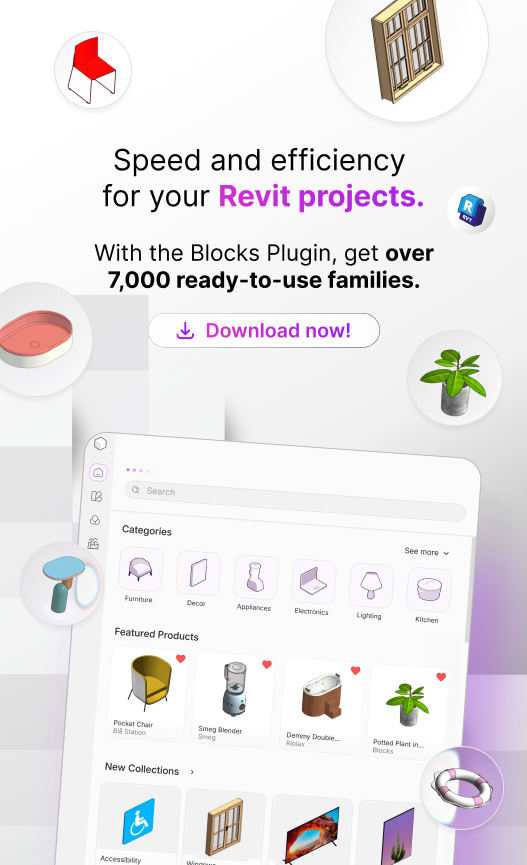
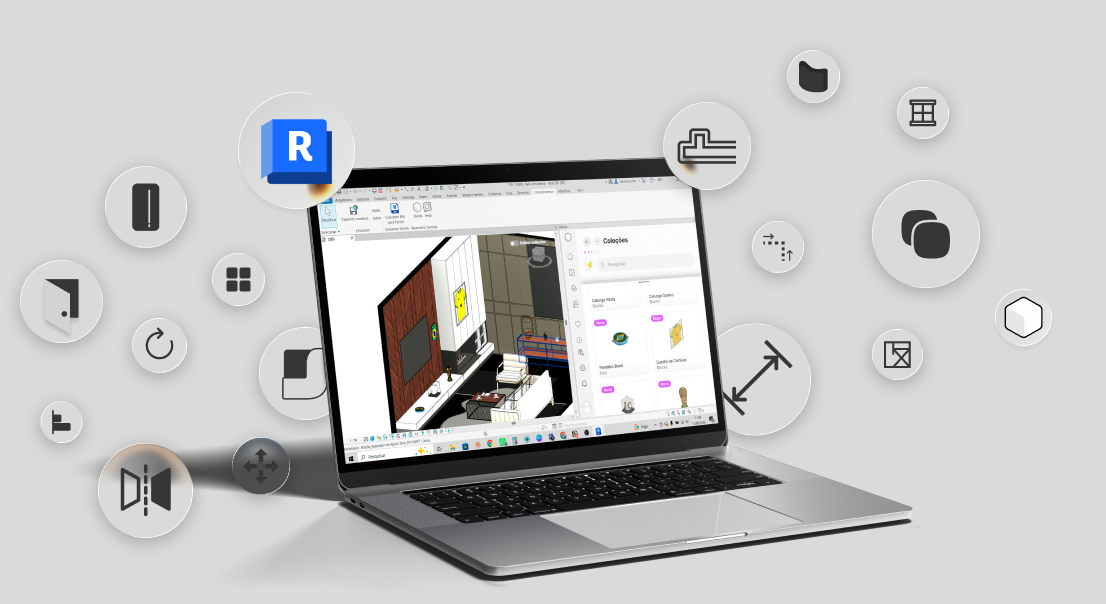
If you’ve chosen Revit, we have great news: with the Blocks plugin, you can speed up your learning curve.
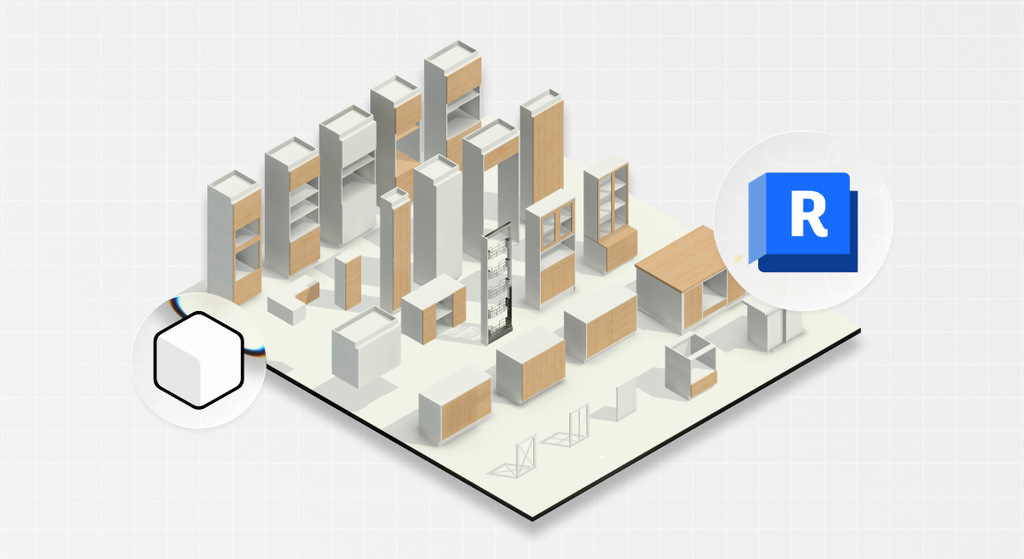
Our BIM library includes over 5,000 parameterized families developed by a specialized team of Building Information Modeling experts.
Instead of building families from scratch, the Blocks plugin lets you finalize your architectural or interior project in just a few clicks.
You’ll receive weekly high-quality families, many based on real manufacturers, ensuring accuracy and reliability.
With Blocks, you and your team save time, focusing on design instead of generic modeling.
Conclusão
As we’ve seen, choosing the right BIM software goes far beyond comparing features in a table.
This is a strategic decision that will shape how you design, collaborate, and innovate in the coming years.
In other words, you’re looking for a true technology partner to supercharge your projects.
The right tool is out there, all you need to do is research, plan, and have a clear vision of your goals.
Enjoyed this article? For more content like this, visit the Blocks blog.