

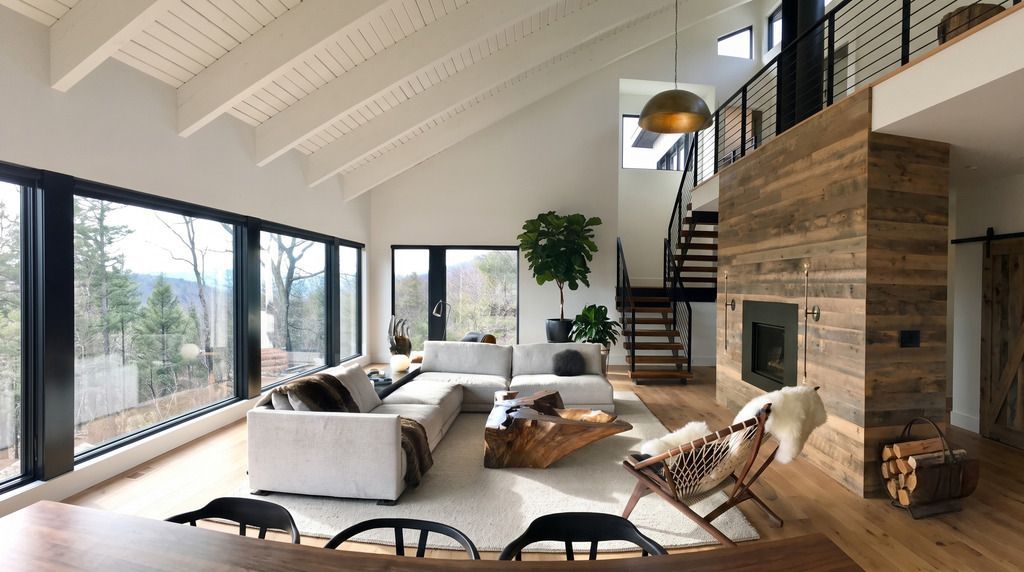
Scandinavian style is a design approach born in the Nordic countries that brings together functionality, natural light, and comfort in bright, uncluttered spaces.
In practice, it relies on a neutral color palette, light wood, and functional pieces to create interiors that feel larger, calmer, and more inviting.
If you design interiors and want to master this style from concept through execution, this guide covers its origins, defining characteristics, and ways to apply Scandinavian style into every room.
Ready to explore it and start using it in your projects? Let’s dive in.
What is Scandinavian style?
Scandinavian style brings together the design traditions of Denmark, Sweden, Norway, Finland, and Iceland.
It gained global recognition in the mid-20th century, when Nordic designers began advocating for a simple idea.
To them, well-designed objects should be beautiful, durable, and accessible to everyone, not just those who could afford them
That democratic perspective explains why the style places equal value on function and form.
At its core , it is a design approach that strips away excess and lets the essentials stand out. The shapes are clean, the materials are honest, and every piece has a reason to be there.
How Scandinavian style began
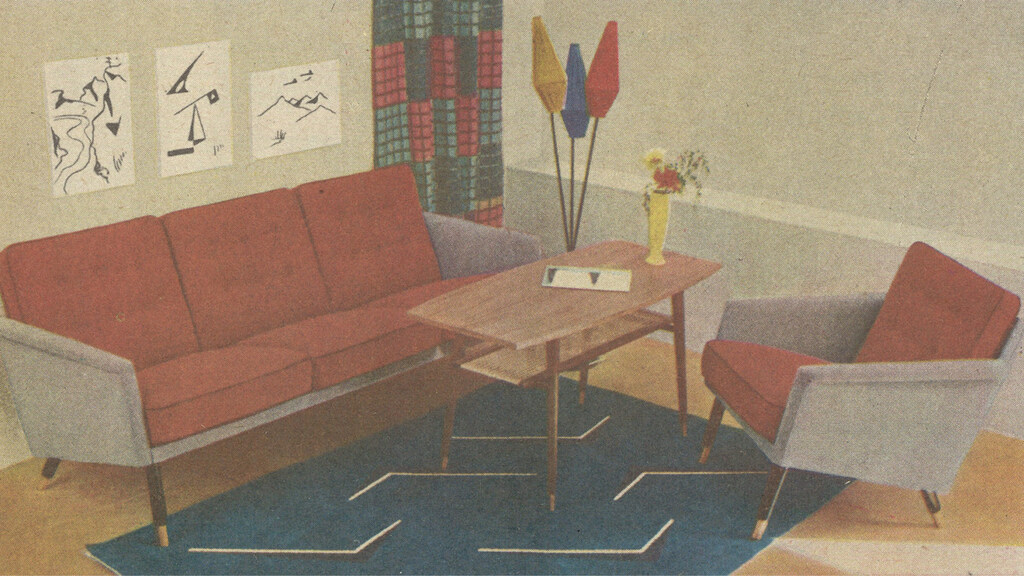
Scandinavian style emerged from the strong Nordic woodworking tradition combined with early 20th-century functionalism, with influences from the Bauhaus movement.
In the Nordic countries, winters are long and sunlight is limited. As a result, homes began to prioritize light-colored surfaces, large windows, and carefully planned lighting to make the most of every ray of daylight.
When discussing Scandinavian style, one of the most frequently mentioned names is Danish designer Kaare Klint (1888–1954), known as the father of modern Danish furniture.
In 1924, he founded the furniture school at the Royal Danish Academy and established a framework that became a hallmark of the style: functionality, proportions based on the human body, and high-quality materials.
Finnish architect Alvar Aalto also played a key role in the style. From the 1930s on, he explored a similar approach, particularly through the bentwood forms that became a defining feature of his furniture.
Scandinavian style reached its golden age in the 1950s, when designers such as Arne Jacobsen, Hans Wegner, Verner Panton, and Poul Henningsen brought this design language to the world.
The term itself became widely known through the traveling Design in Scandinavia exhibition in 1954 and the Lunning Prize, awarded between 1951 and 1970.
The characteristics of Scandinavian style
The characteristics of Scandinavian style are subtle but distinctive. That is why a few signature elements appear in nearly every project that adopts this design approach.
Let’s take a closer look at those defining features.
Light colors and plenty of natural light
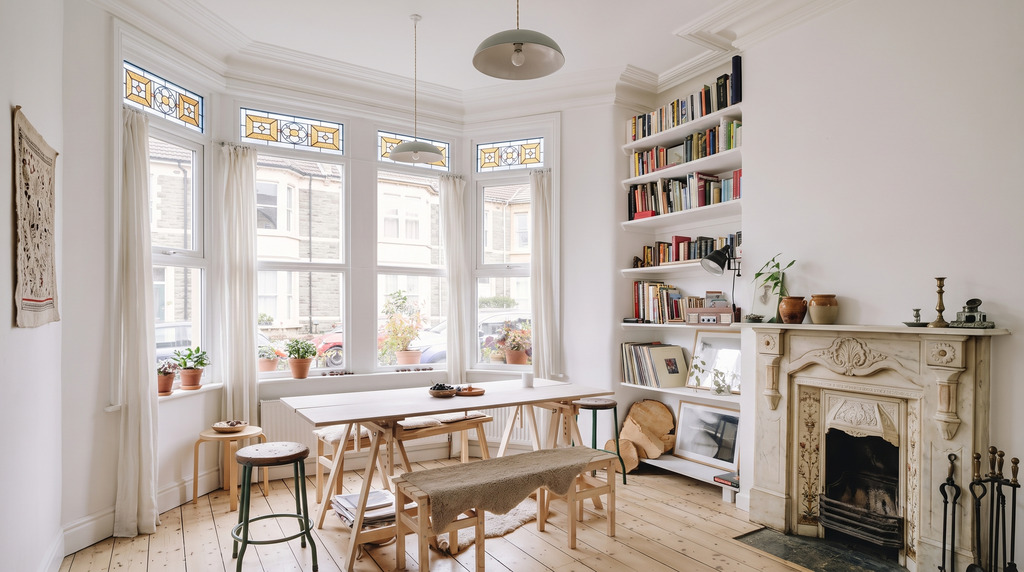
The foundation of Scandinavian style is a light color palette. White, off-white, soft gray, and natural wood tones dominate walls and flooring, always working in favor of natural light.
Color comes to life through carefully chosen accents, such as a blue cushion, a graphic rug, or a green plant.
Wood and natural materials
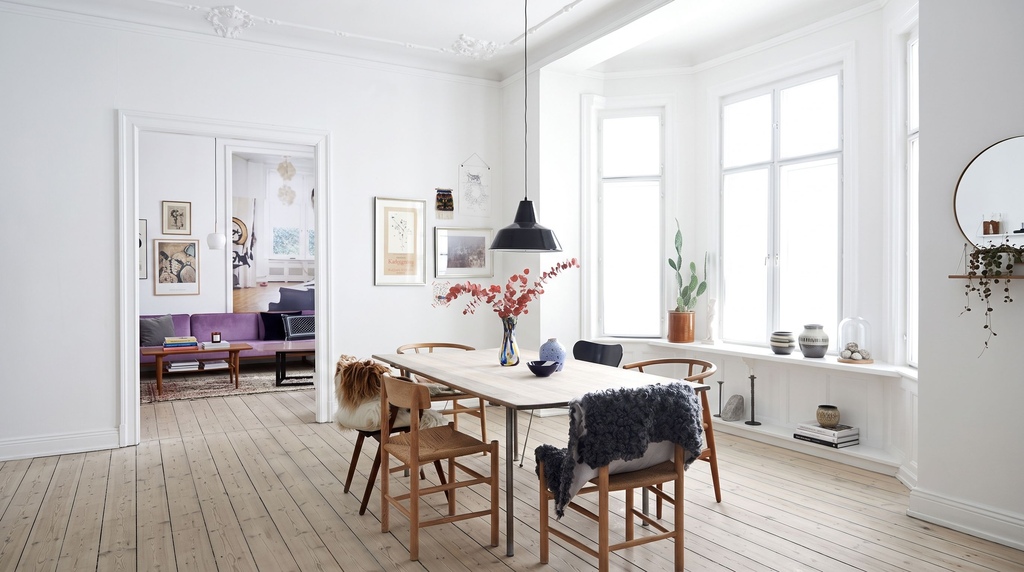
Light wood is almost essential, especially pine, birch, and oak. It appears in flooring, furniture, and detailing, bringing warmth to the neutral palette.
Wool, linen, leather, and natural fibers also complete the material palette and add texture to the space. In Scandinavian style, natural, unpretentious materials matter more than flashy finishes.
Functional furniture and a minimalist touch
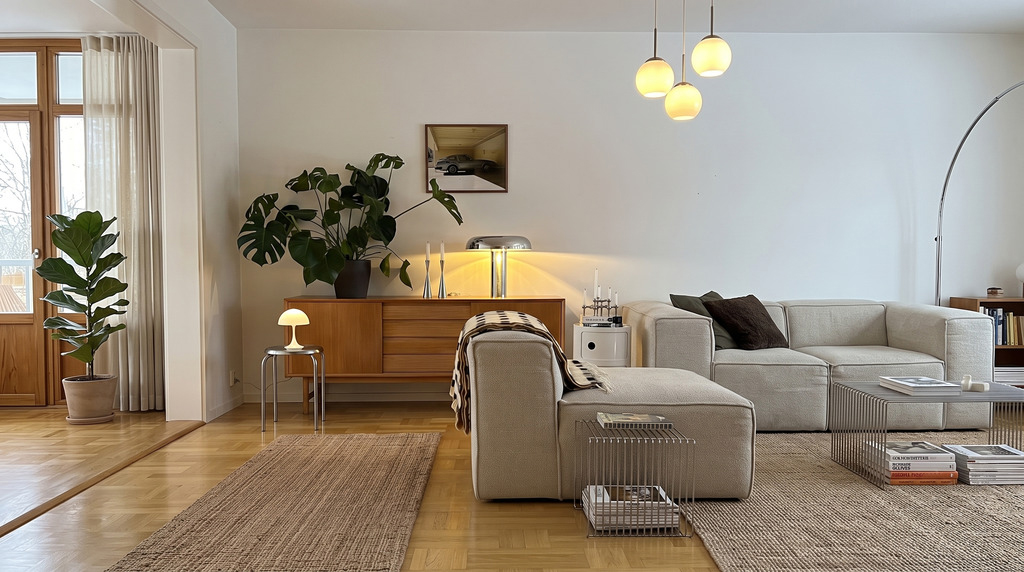
Scandinavian furniture features clean lines, slim legs, and a clear purpose. There is no room for excess.
Every piece solves a practical purpose while helping the space feel open and visually light. . This is where Scandinavian minimalism comes in, not as emptiness, but as room for what truly matters.
Hygge: the comfort that gives the style its soul
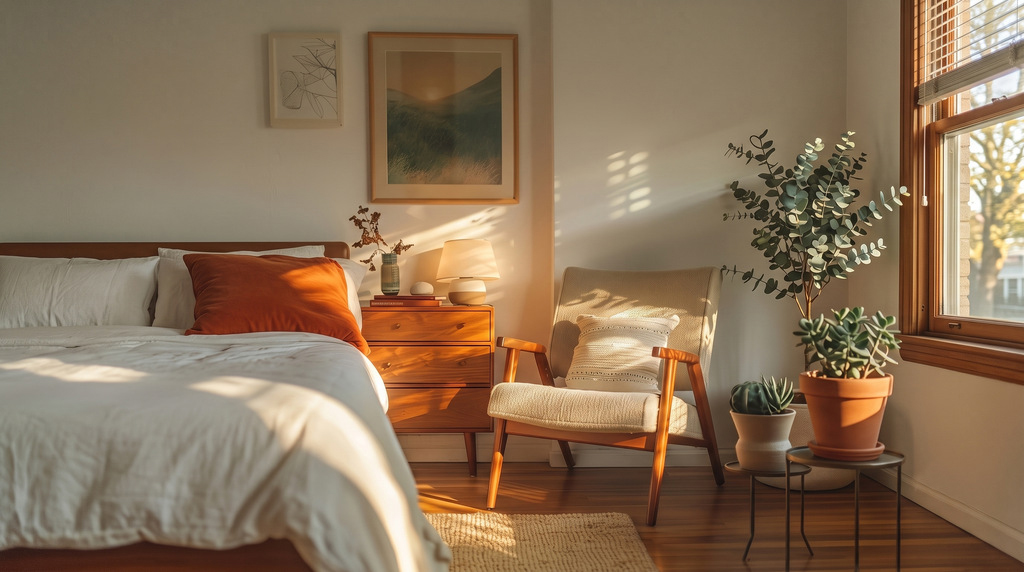
No concept explains Scandinavian style better than hygge. The Danish word describes the feeling of comfort found in simple everyday moments.
In a design project, hygge becomes candles, throws, warm lighting, and inviting corners. It is the detail that transforms a beautiful room into a space where people genuinely want to spend time.
Scandinavian style, room by room
Now that you know the main characteristics of Scandinavian style, let’s look at how to apply it in different rooms.
Living Room
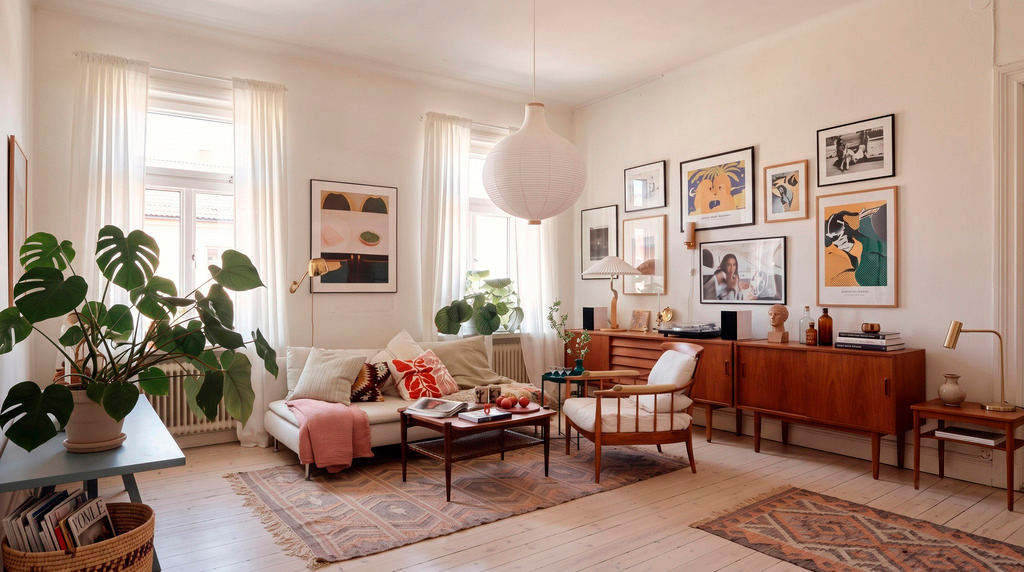
In the living room, Scandinavian style calls for a sofa with simple lines, a light-toned palette as a base, and layered textures.
A wool rug, linen cushions, and a throw casually placed over the arm of the sofa are all great choices.
When possible, add one standout piece, such as the iconic Eames Lounge Chair, and let the rest of the room breathe. The space works best when there is enough room to move around comfortably.
Kitchen
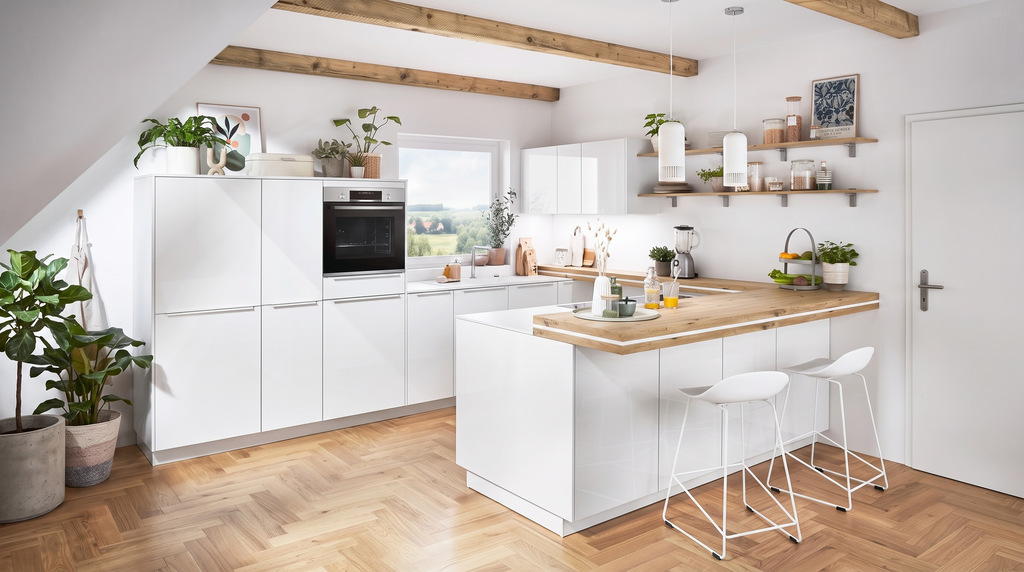
A Scandinavian-style kitchen combines flat-front cabinetry, minimalist pulls, light countertops, and exposed wood.
White takes the lead, the cabinetry almost blends into the walls, and everyday utensils become part of the décor.
Open shelving with attractive dishware reinforces the idea of functionality on display.
Bedroom
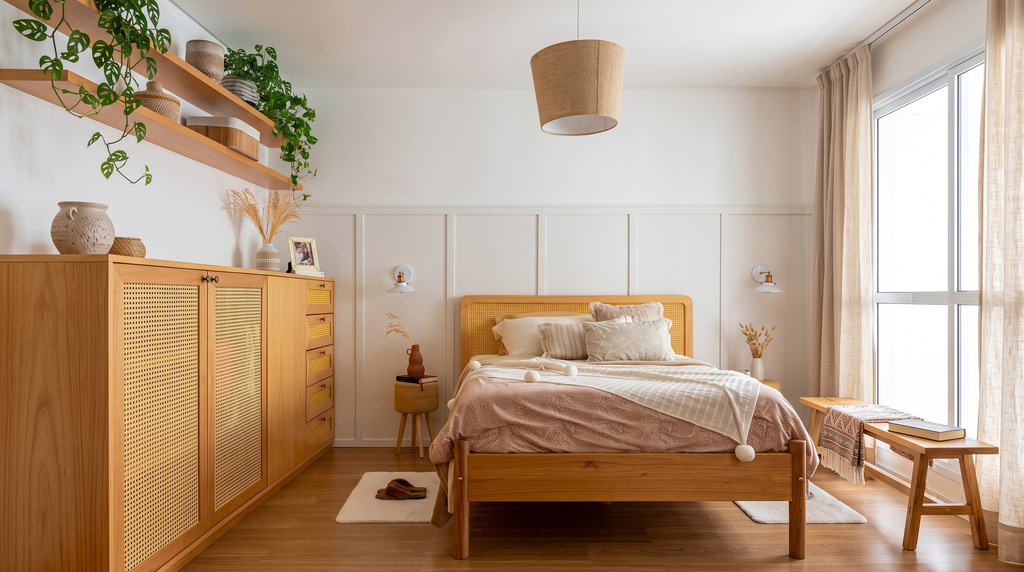
In a Scandinavian-style bedroom, rest is the main priority. Neutral bedding, a wood headboard, and soft lighting create the foundation.
Less is more here as well. A soft rug at the foot of the bed and two reading lamps are enough to complete the space.
Modern Scandinavian style and how to make it work in U.S. homes
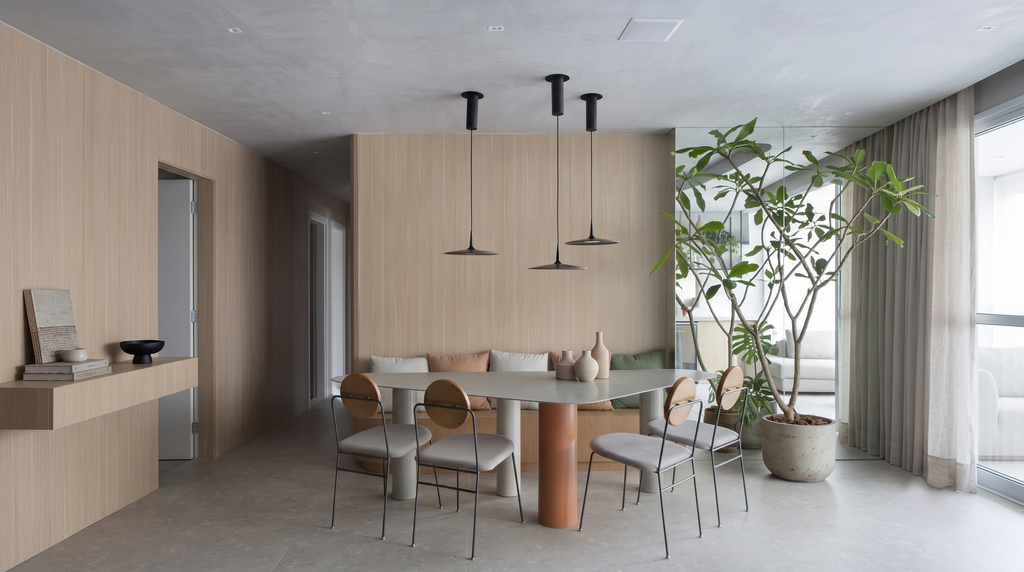
Because Scandinavian style is rooted in Nordic culture, adapting this design language to U.S. projects calls for a few adjustments. Climate, natural light, available materials, and residential layouts can vary significantly across the country.
Still, adapting Scandinavian style to U.S. projects is not difficult. With the right approach, it can be tailored to different regions, project types, and ways of living. Here is how:
- Work with available natural light: Where large windows and open living areas are part of the layout, they can support the Scandinavian preference for bright interiors. Keep window treatments light and simple whenever privacy and solar control allow, and use layered lighting to maintain a warm atmosphere after sunset.
- Choose wood tones that complement the project: Pale oak, ash, maple, and birch all work naturally within a Scandinavian palette. In projects with warmer finishes or more traditional architectural details, white oak, walnut, or lightly stained wood can create a balanced transition without losing the style’s sense of warmth.
- Use a light palette as the base and add contrast intentionally: Keep walls and flooring in neutral shades, then introduce black through window frames, lighting fixtures, and metal finishes. This creates the contemporary contrast that distinguishes modern Scandinavian style from its more classic interpretation.
- Layer textiles according to the region: In colder parts of the country, wool rugs, knit throws, and heavier textiles reinforce the cozy side of Scandinavian design. In warmer climates, linen, cotton, and woven natural fibers create the same tactile effect while keeping interiors lighter and more breathable.
- Define open-plan spaces with purpose: Scandinavian style works especially well in open kitchens, living rooms, and dining areas. Use rugs, lighting, furniture placement, and a consistent material palette to define each zone while maintaining visual continuity throughout the space.
- Prioritize practical storage: Function is central to Scandinavian design. Built-in cabinetry, streamlined shelving, entry benches, and concealed storage help reduce visual clutter and support everyday routines in family homes, apartments, and mudrooms.
- Bring in greenery with plants suited to the space: Indoor trees, snake plants, pothos, rubber plants, and other low-maintenance varieties can soften clean lines and strengthen the connection to nature. Select plants according to the available light and the level of maintenance the project can support.
- Pair Scandinavian elements with familiar American styles: Mid-century modern furniture, subtle industrial details, and restrained modern farmhouse elements can work with a Scandinavian foundation. The key is to keep the palette cohesive and avoid too many competing finishes or decorative pieces.
- Source local materials and makers whenever possible: Regionally sourced wood, handcrafted ceramics, locally made furniture, and natural stone add character while supporting a more thoughtful material palette.
With these adjustments, Scandinavian style can feel natural in U.S. projects: bright, functional, comfortable, and responsive to local climate, materials, and everyday routines.
Bring Scandinavian style into Revit in just a few clicks
Now you are ready to apply Scandinavian style in your projects.
If you create interiors in Revit, Blocks has something for you. Our team has prepared exclusive parametric families inspired by Scandinavian style.
The selected families are based on pieces featured at the 3 Days of Design, held in Copenhagen from June 10 to June 12.
Getting started is easy: download the Blocks Plugin, create an account, and start using the families in Revit.
With Blocks, you can access more than 8,000 parametric families directly inside Revit, with 25 new additions every week and products from more than 1,000 real manufacturers.

FAQ: Frequently Asked Questions About Scandinavian Style
What defines Scandinavian style in interior design?
Scandinavian style is defined by the combination of functionality, natural light, and comfort. In interior design, this appears through a light color palette, visible wood, furniture with simple lines, minimal visual clutter, and a touch of hygge.
What colors are most commonly used in Scandinavian design interiors?
The most common colors in Scandinavian design are light neutrals, such as white, off-white, gray, and beige, always paired with natural tones of wood. Accent colors are used in small doses, with blue, green, terracotta, or black creating contrast without compromising the overall sense of lightness.
How can you combine neutral colors and light wood in a Scandinavian-style bedroom?
In a bedroom, use neutral colors on the walls and bedding, then bring in light wood through the headboard, flooring, or furniture. This balance keeps the space serene and supports rest, which is the main goal of Scandinavian-style bedrooms. Add a layer of linen or lightweight wool textiles to create warmth without making the room feel heavy.
What natural materials are most common in Scandinavian architecture?
In Scandinavian architecture, the most common natural materials include light wood, such as pine, birch, and oak, along with wool, linen, leather, and stone. They bring texture, durability, and a connection with nature, which is at the core of the style.