
If you’re a fan of American cinema and have watched classics from the 1940s to the 1960s, you’ve probably noticed a recurring interior style in those homes.
It’s what many would call a “classic Hollywood look,” with refined leather furniture, plenty of wood, and warm lighting (the series Mad Men recreated 1960s interiors perfectly).
This aesthetic is known as Mid-Century Modern, a style that boomed from the 1940s to the 1960s and made a strong comeback in the 2020s.
Of course, the style has evolved to fit contemporary living, but it hasn’t lost its refined spirit.
If you’re a fan of Mid-Century Modern, this article will walk you through its history and show how to decorate with this iconic concept.
Ready to take a trip back to the 1960s? Enjoy the reading.
What is Mid-Century Modern style?
Mid-Century Modern is an architectural and design movement that emerged in the mid-20th century, around the 1940s to 1960s.
It blends vintage and modern influences with clean lines, functional forms, and minimalistic aesthetics that reflected the post-war spirit of innovation.
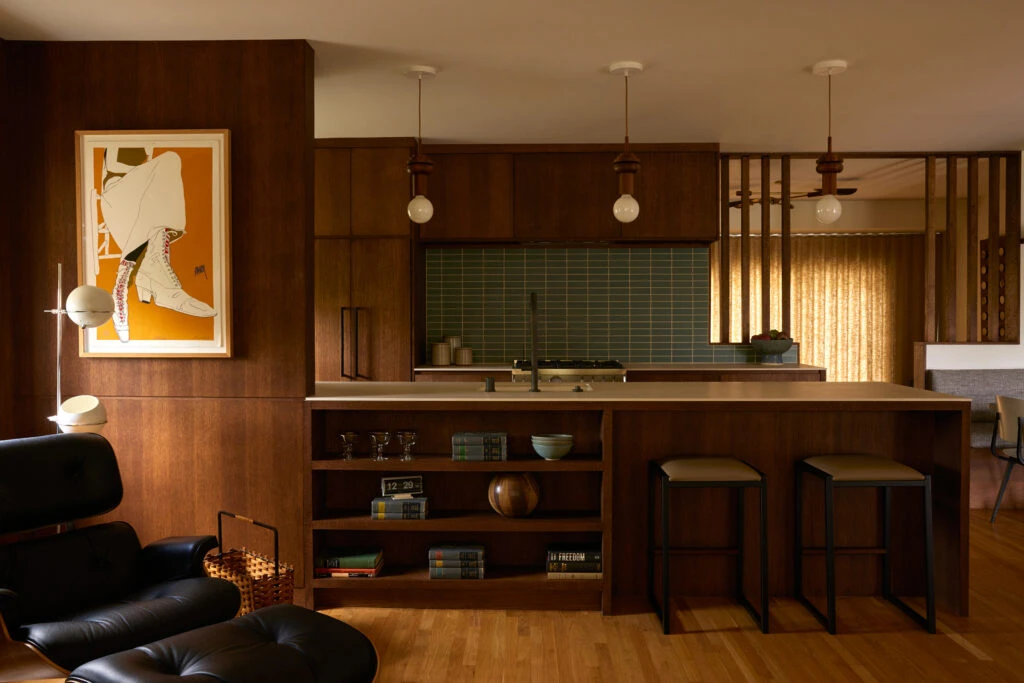
When we talk about Mid-Century Modern, we’re talking about interiors that balance simplicity and elegance, especially using natural materials like wood and leather.

Stephannie Serafini
Architect | Blocks®
“It’s fascinating how Mid-Century Modern draws heavily from the Bauhaus, especially in how materials appear unfiltered. Wood with visible textures, timeless leather, exposed metals… all of it reinforces authenticity. Respecting these natural characteristics is what keeps the style fresh and sophisticated even decades later.”
When did Mid-Century Modern emerge?
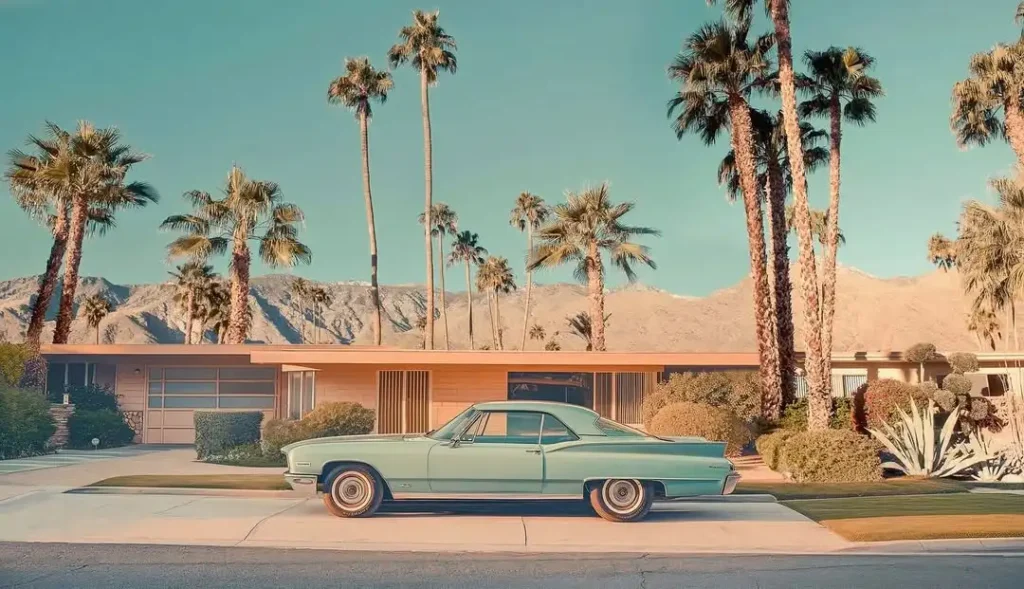
House on a street in Palm Springs, California | Photography by Helene Havard Photography
As mentioned earlier, Mid-Century Modern took shape in the late 1940s, right after World War II, and stayed strong until the mid-1960s.
This was a period of economic stabilization, creating high demand for practical, simple homes.
Inspired by Bauhaus principles and Scandinavian design, Mid-Century helped democratize modern design, bringing beautiful, functional, and accessible furniture to everyday families.
In the United States, especially, the style flourished in suburbs and growing cities. Homes featured open-plan layouts, large glass windows, and decor centered around comfort.
Palm Springs, California, became (and still is) a “living museum” of Mid-Century Modern, with preserved homes and annual events like Modernism Week celebrating the style.
What are the characteristics of Mid-Century Modern?
Born from modernist ideas during a period of reconstruction and rapid technological development, Mid-Century Modern introduced new materials, new ways of living, and new forms.
Now let’s explore its key features.
Lots of wood and leather
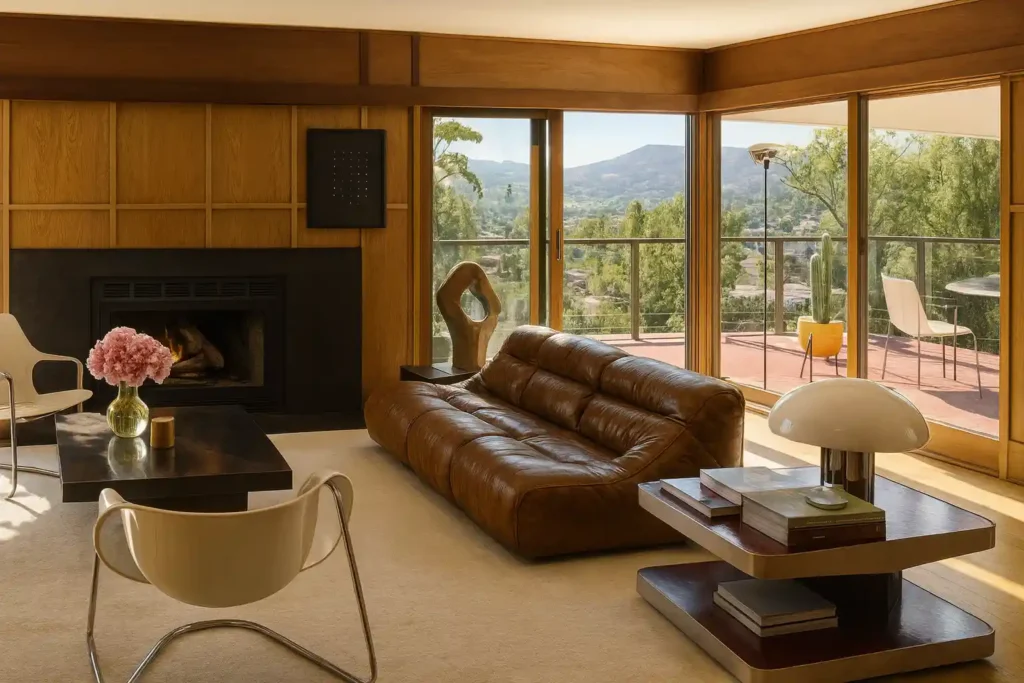
Mid-Century Modern makes heavy use of natural materials.
Smooth-finished wooden furniture is a must, as well as genuine leather upholstery, which adds sophistication.
Designers used these materials abundantly: alongside metal, concrete, stone, and others.
The result is warm, inviting spaces with solid-wood furniture and tacked leather sofas.
These materials were also chosen for their durability—no wonder many original pieces are still in great condition today.
Color in Mid-Century Modern
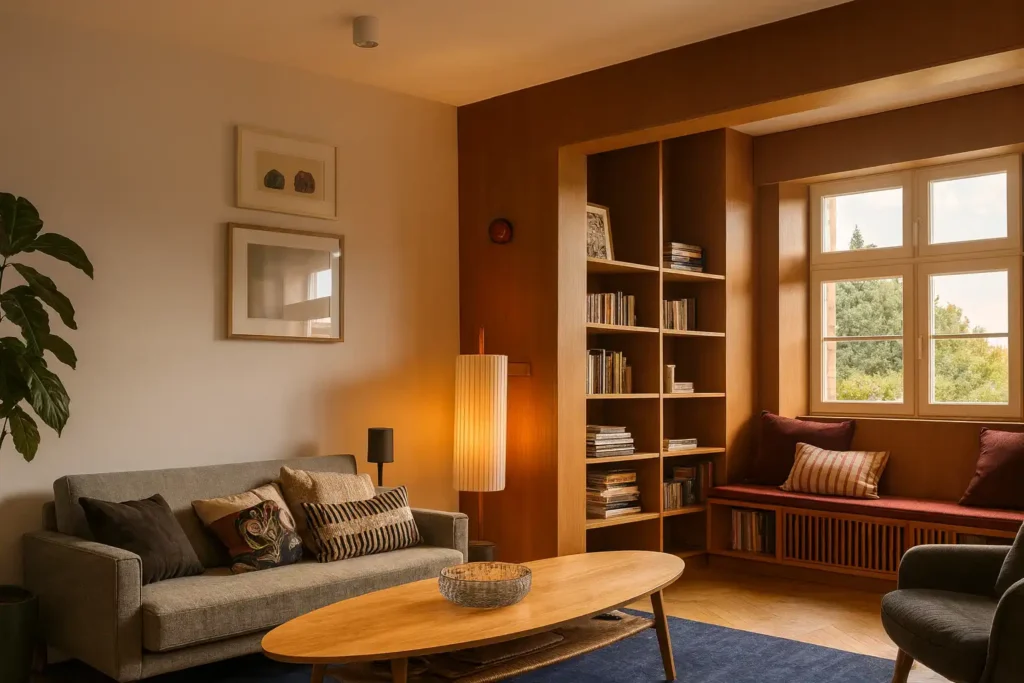
Even though the base palette is neutral and minimalistic, color is far from absent.
Quite the opposite: Mid-Century uses strategic pops of color to energize spaces on rugs, artwork, sofas, or armchairs.
Imagine a living room with dark wood paneling, black leather sofas, warm lighting, and a deep-green rug.
That rug completely transforms the space.
These accents bring the “Modern” into Mid-Century, shifting the style beyond the purely vintage.
Geometric patterns with colors were very popular at the time, especially in rugs and artwork. A great reference is Theo van Doesburg’s Composition XXII (1922).
Mid-Century Modern is more than wood and leather, it’s color and texture.
Want to know the color trends for 2025? Check out the article we prepared for you: Color Trends for 2025: The 10 Most Popular Hues of the Year!
The 1950s vision of the future
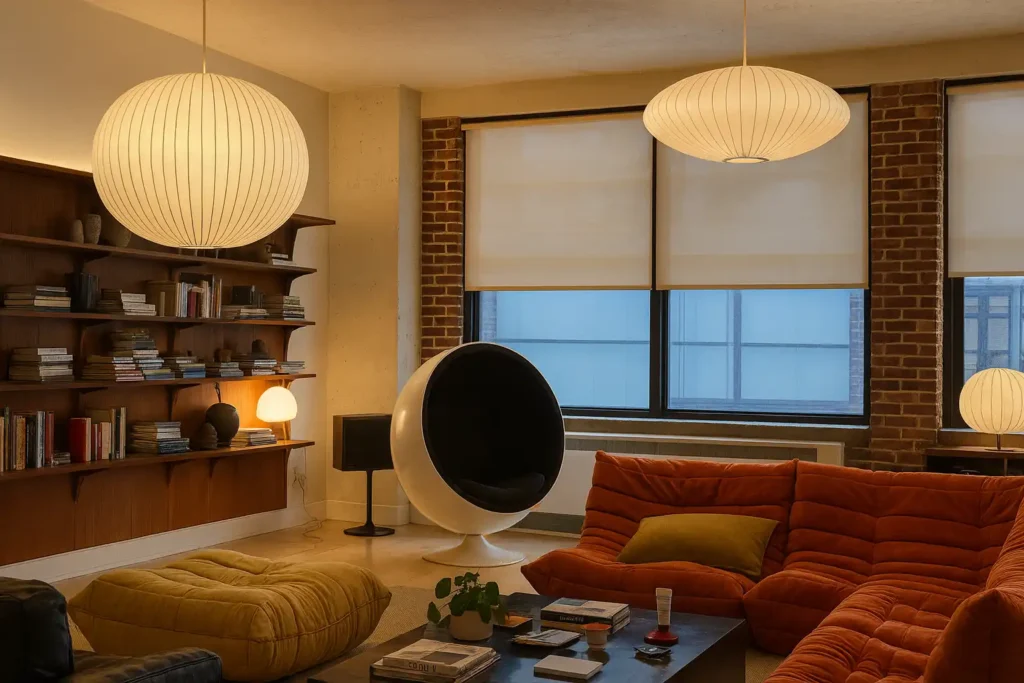
Even though the style dates back decades, Mid-Century represented an idealized future.
That’s why many pieces felt futuristic, like the Ball Chair (1963) by Eero Aarnio.
The 1950s and 1960s were the height of the space age and the technological race, and interior designers brought those influences into their work.
UFO-shaped lamps, oval coffee tables, and curved futuristic chairs were everywhere.
Despite the retro look, many Mid-Century pieces still feel like objects “from the future.”
Warm, cozy lighting
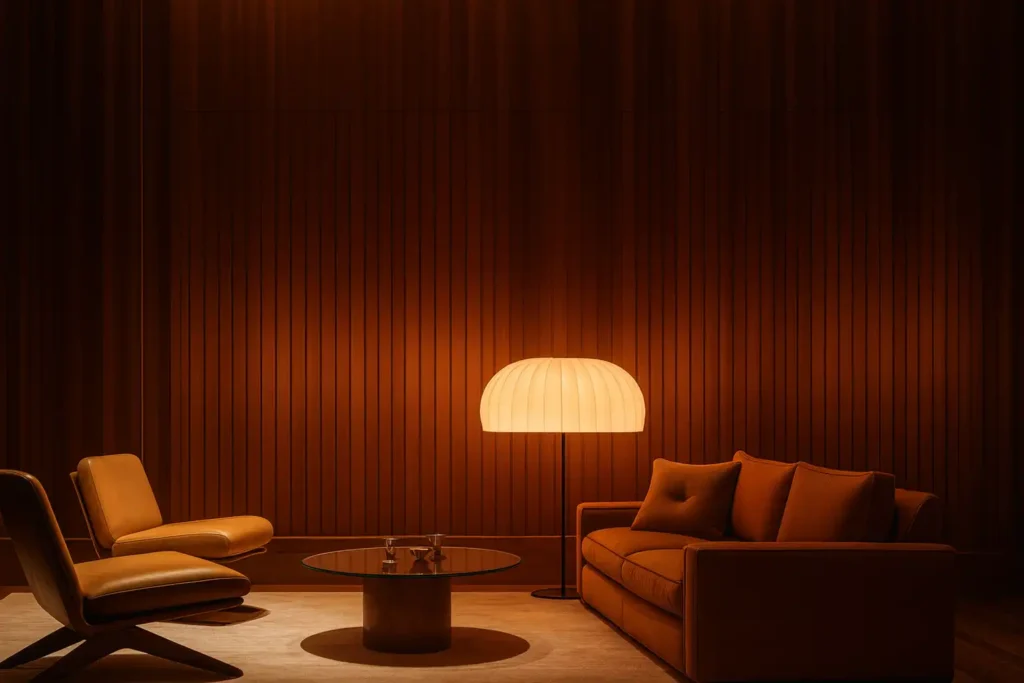
Warm lighting is essential in Mid-Century Modern interiors.
Natural light is maximized during the day, but once evening arrives, warm, low-intensity lighting defines the atmosphere.
Large-shade table lamps, sculptural floor lamps, and metal-and-frosted-glass pendants create an intimate ambiance.
For that nostalgic glow, choose bulbs between 2700K and 3000K.
Cinema-worthy furniture
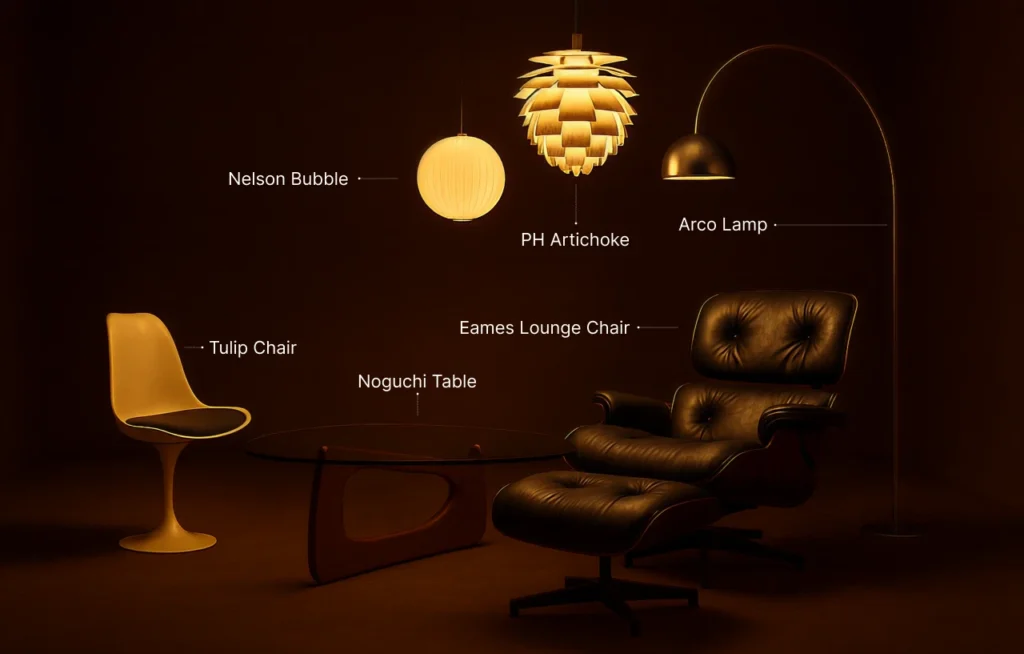
If you enjoy browsing old design magazines or watching classic films, you’ve definitely seen iconic Mid-Century furniture.
One of the most famous examples is the Eames Lounge Chair, an icon that still appears in interiors worldwide.
Other notable pieces include:
- Arco Lamp (1962), Achille & Pier Giacomo Castiglioni
- Egg Chair (1958), Arne Jacobsen
- Tulip Chair (1956–57), Eero Saarinen (Knoll)
- Noguchi Table (1948), Isamu Noguchi
- PH Artichoke (1958), Poul Henningsen (Louis Poulsen)
- Nelson Bubble Lamps (1952), George Nelson
It’s easy to see how Mid-Century Modern has influenced generations of interior design enthusiasts.
How to decorate with Mid-Century Modern
Now that you know its main characteristics, you may be wondering how to bring this style into your own projects.
Since Mid-Century has returned as a major trend in the 2020s, applying it today is easier than ever.
Here are five essential tips to help you bring this aesthetic into your projects:
- Avoid excess: The first rule is “less is more.” Stay true to minimalism and functionalism. Don’t overcrowd the room. Choose functional, aesthetically refined pieces.
- Mix colors and materials: The style blends neutral tones with bold accents and natural materials. Add a green rug, an orange sofa, artwork with primary colors… just don’t overdo it.
- Blend old and new: Your Mid-Century decor shouldn’t feel frozen in the 1940s. Mix a vintage coffee table with a contemporary sofa. The contrast highlights the best of both worlds.
- Choose a statement piece: Every Mid-Century space has one star, often the Eames Lounge Chair. Place your main piece where it stands out and build the composition around it.
- Warm lighting: Lighting delivers the coziness and sophistication the style is known for. It’s perfect for reading a book or listening to vinyl, exactly the atmosphere Mid-Century evokes.
By following these tips, you’ll create a space that truly reflects Mid-Century Modern design. Even as trends evolve, this aesthetic continues to inspire new generations.
You’ve likely noticed that Mid-Century Modern carries a subtle minimalist essence.
If you want to learn more about minimalist architecture, read our article: Minimalist Architecture: discover how such a light and simple concept can transform your project.
And if you want to download the project template featured in the video, click here.
Mid-Century in Revit? Blocks has it!
Loved Mid-Century Modern? So do we!
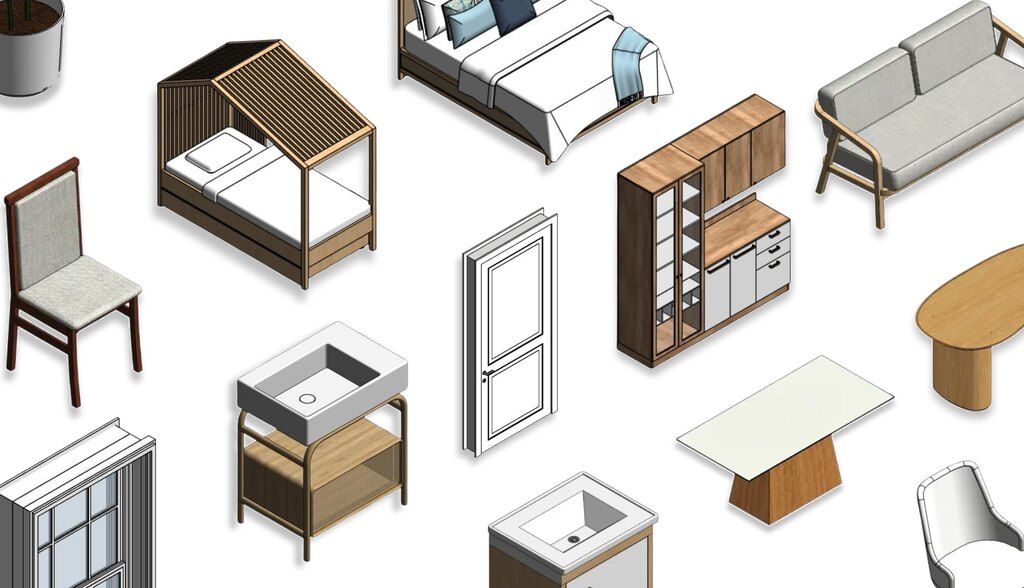
Many of our parametric Revit families are inspired by this iconic style—including the Eames Lounge Chair, available for download.
Imagine creating a Mid-Century atmosphere in just a few clicks, without worrying about parametrization.
With the Blocks plugin, it’s totally possible. Inside the plugin, you’ll find over 7,000 BIM families ready to use in your Revit projects.
What are you waiting for? Download it for free now!

Conclusion
Mid-Century Modern is truly timeless. Born in the 1940s as a symbol of modernity, it remains relevant today and will stay that way for decades.
It’s perfect for those who appreciate contemporary design but want a classic touch.
If that sounds like you, don’t hesitate to bring Mid-Century elements into your projects.
Enjoyed this article? Check out the Blocks blog for more!
And follow us on Instagram, TikTok, YouTube, and LinkedIn for exclusive content.