
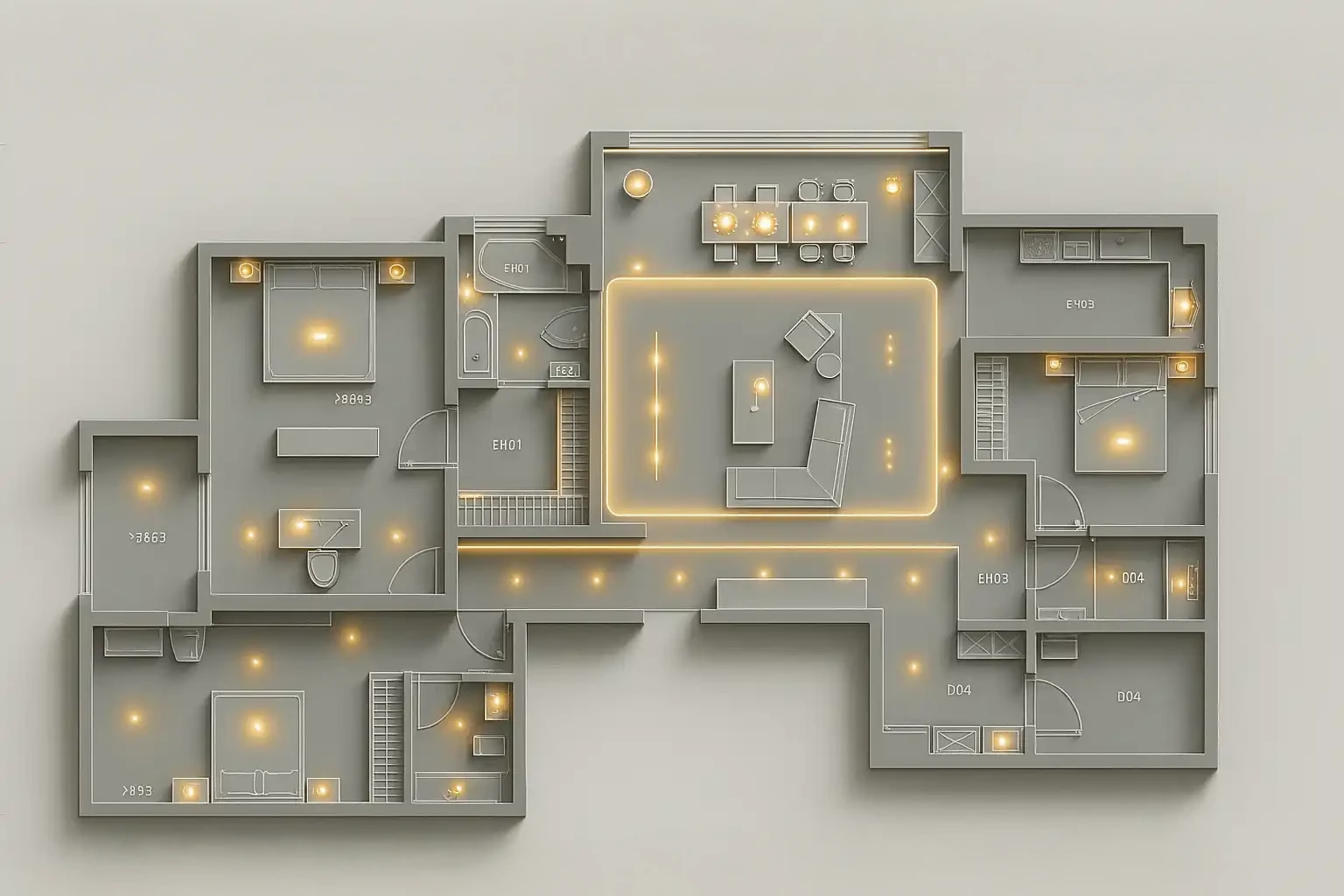
Have you ever experienced a space that feels “just right” because the light was planned, not improvised? ? It’s a distinctive atmosphere that only a well–executed lighting design project can provide.
No matter how flawless your architecture and furniture design are, if lighting, natural and artificial, is not integrated early, the result will likely fall short.
A well-planned lighting design project reframes a space. It balances light distribution and elevates visual comfort for users.
Rather than placing fixtures at random, a professional lighting plan maps requirements to tasks, users, and context.
In this article, Blocks clarifies what a lighting design project entails, its main types, the key trends for 2025, and a step-by-step guide to help you design your own.
Ready to shed light on your next project? Let ‘s begin !
What is a lighting design project?
A lighting design project, or lighting plan, defines how a space is illuminated across technical and aesthetic criteria.
It locates and specifies light sources to optimize comfort, efficiency, and visual appeal.
In practice, it quantifies illuminance needs, selects fixtures and lamps, and chooses controls and technologies appropriate to each activity.
When developing a lighting design project, professionals consider dimensions, mounting heights, wall/ceiling finishes, daylight availability, and user goals.
For example, a residential lighting design project may prioritize warmth and well-being, while an office project emphasizes task visibility and productivity.
Ultimately, a lighting design project integrates architecture, interior design, and engineering to create spaces that work and feel better.

Erick Mark
CFO | Blocks®
“Think of every light source as an architectural element. Prioritize a clear lighting hierarchy based on how each area is used. Ambient (general) lighting supports circulation; task lighting enables focused work at countertops and workstations; accent lighting highlights decorative features and textures. When laying out fixtures, vary output and color temperature to create contrast and atmosphere. Integrate occupancy sensors and dimmers to automatically adjust light levels, cutting energy use while improving comfort. Never forget to control glare: aim lights carefully and avoid direct reflections into occupants’ eyes or onto highly reflective surfaces. With thoughtfully layered lighting, a Lighting Design Project gains depth, character, and energy efficiency.”
Types of lighting design projects
In a strategic lighting design project, different types of lighting are combined to meet varied needs. The main categories are:
- General lighting (diffuse): provides overall illumination for orientation and base visibility, typically via ceiling fixtures, recessed downlights, surface mounts, or pendants that distribute light evenly. It’s the base layer of any lighting design project.
- Task lighting (direct): targets brighter, focused light exactly where work happens, such as desk lamps for reading, under-cabinet lighting over counters, or directional spots on work surfaces.
- Accent lighting (highlighting): draws attention to focal points: artwork, textured walls, architectural features, using adjustable spotlights, recessed linear LEDs, or wall sconces to model depth and contrast.
When layered thoughtfully with architecture and décor, these types of lighting reinforce comfort, usability, and beauty to a space.
How to develop a lighting design project
Now that you know the main types, let’s walk through the step-by-step process of creating your own strategic lighting design project.
1. Identify the project requirements
The first step is to understand the needs and objectives of the space.
Ask: what will the space be used for? What kind of atmosphere should it convey? Are there focal points to highlight?
For example, a residential living room may require coziness and layered highlights, while a corporate office may need higher illuminance for productivity.
It’s also essential to assess physical details: dimensions, furniture layout, flooring, wall and ceiling colors (since colors affect light reflection), and availability of daylight
Don’t forget to consider activity zones: reading, cooking, hosting guests, working on a computer, etc.
This way, you can identify lighting requirements for each zone and challenges such as high ceilings or poorly lit corners.
2. Define the types of lighting
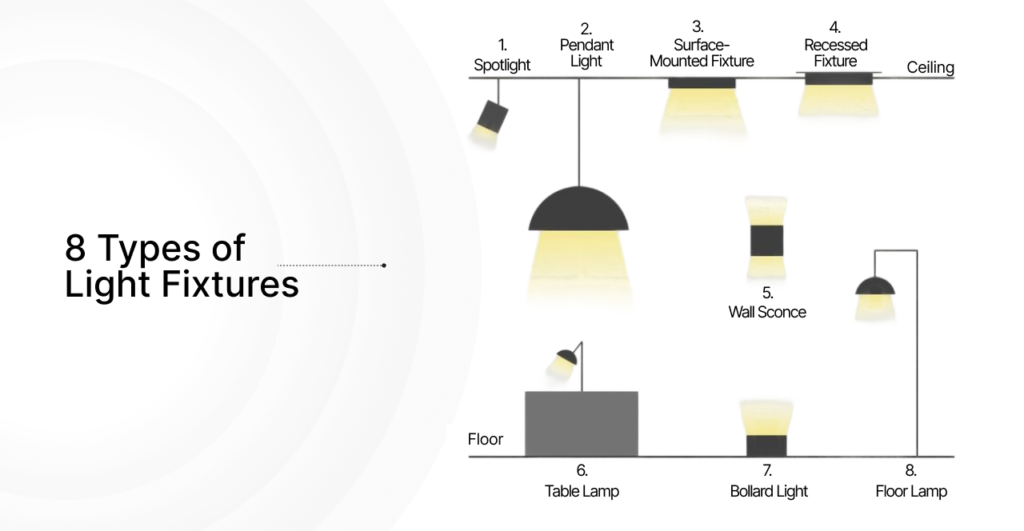
With the brief in hand, define the lighting layers ambient, task, and accent and where each belongs.
For instance, in a kitchen you may need to layer ambient lighting across the whole space, add focused task lighting over the food prep counter, and perhaps include accent lighting inside cabinets.
In a residential TV room, diffuse indirect ambient light can set a comfortable mood, complemented by accent lights that draw attention to decorative shelving.
At this stage, the key is to choose fixtures and lamps suited to each purpose, whether flush-mounts, track spots, pendants, recessed LED strips, sconces, table lamps, or others, depending on the effect you want to achieve.
This is both a creative and technical step, where you balance different layers of light throughout the space, making sure illumination is always available where it matters most.
3. Choose the light color temperature
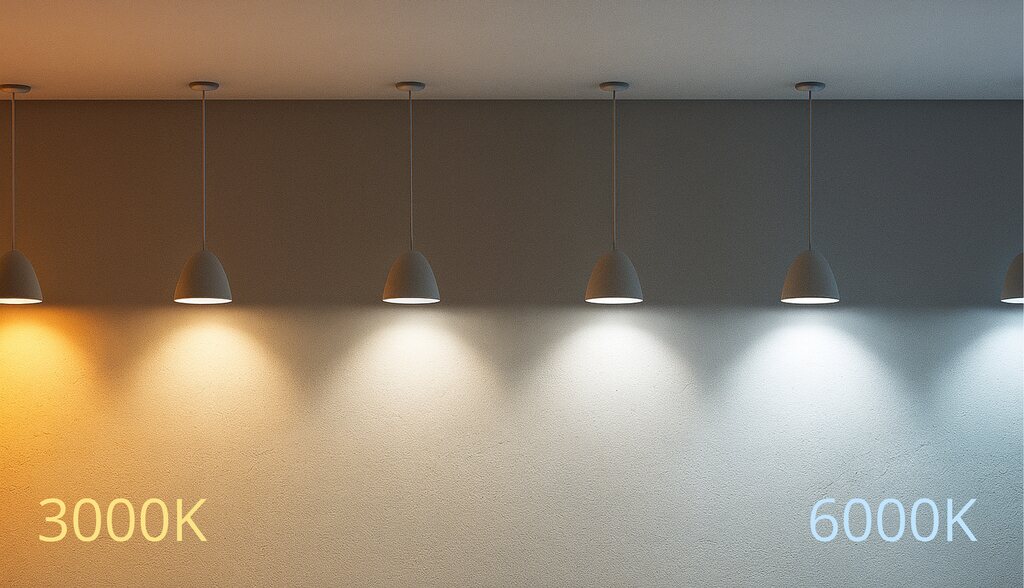
Color light temperature is a strategic factor in lighting design, shaping both the atmosphere and the way people experience a space.
Light ranges from warm tones (yellowish) to cool tones (white/blueish), measured in Kelvin (K).
That’s why it’s important to match the color temperature to the function of each space..
As a rule of thumb, social and relaxation areas work best with warm light (~2700–3000K), which creates a cozy, inviting feel.
On the other hand, workspaces, study areas, or high-traffic zones benefit from neutral to cool light (4000K or higher), which enhances clarity, focus, and productivity.
For instance, an office or kitchen calls for neutral or cool lamps to ensure visibility and concentration, while a dining room or lounge feels much more welcoming with warmer lighting.
4. Plan strategic light distribution
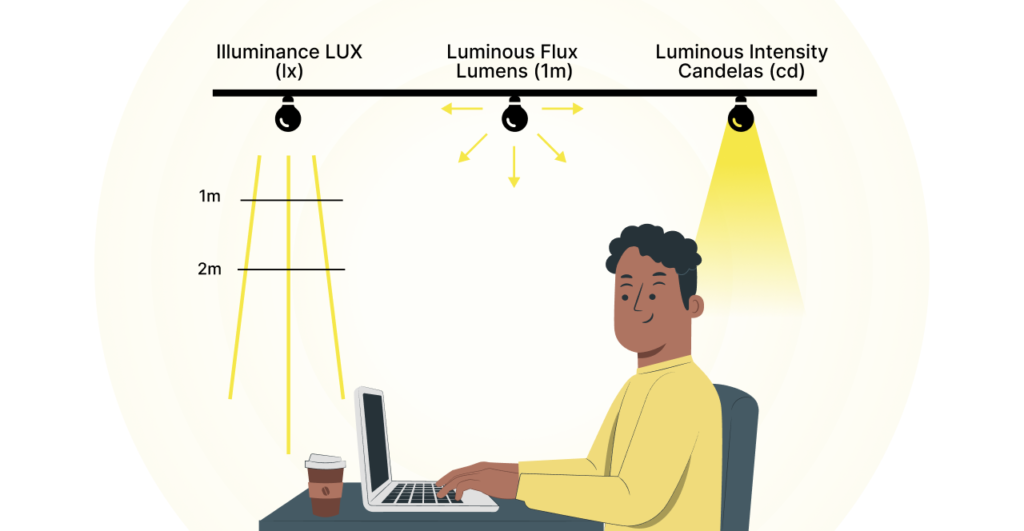
Once the types of light and color temperatures are defined, the next step is positioning them strategically throughout the space.
Lighting distribution means deciding where each fixture should go and how many are needed to achieve both efficiency and visual harmony.
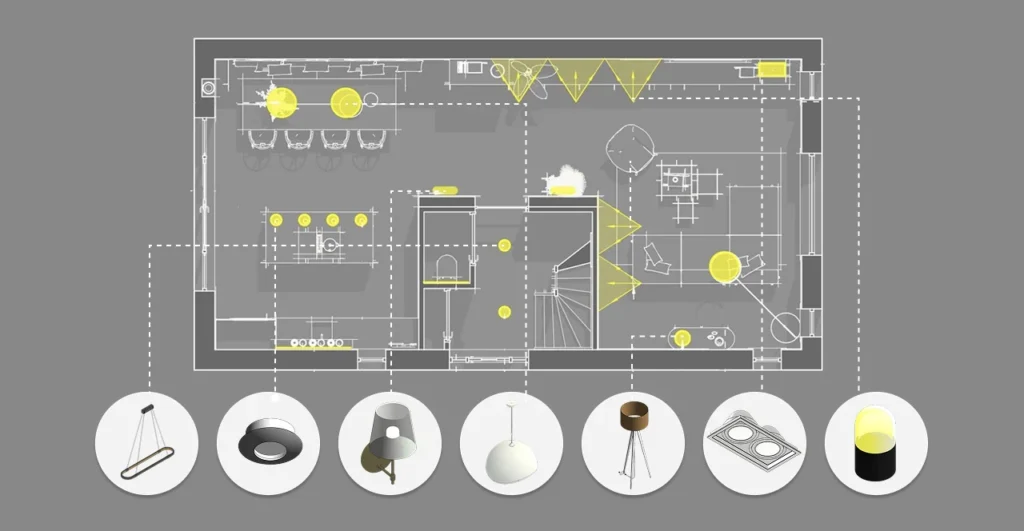
At this stage, designers typically prepare a preliminary lighting layout, mapping out fixture points on the floor plan.
Key factors to consider include:
- mounting height (e.g., recessed ceiling spots vs. low pendants over a table);
- beam angle (broad coverage or focused light);
- light spread, ensuring there are no dark corners or harsh shadows.
It’s also crucial to prevent glare, no one should have light shining directly into their eyes or bouncing off reflective surfaces.
That’s why a well-planned layout places fixtures where they highlight what matters (floors, tables, walls, and decorative elements) while keeping the experience comfortable for everyone in the space.
5. Develop the lighting plan and execution
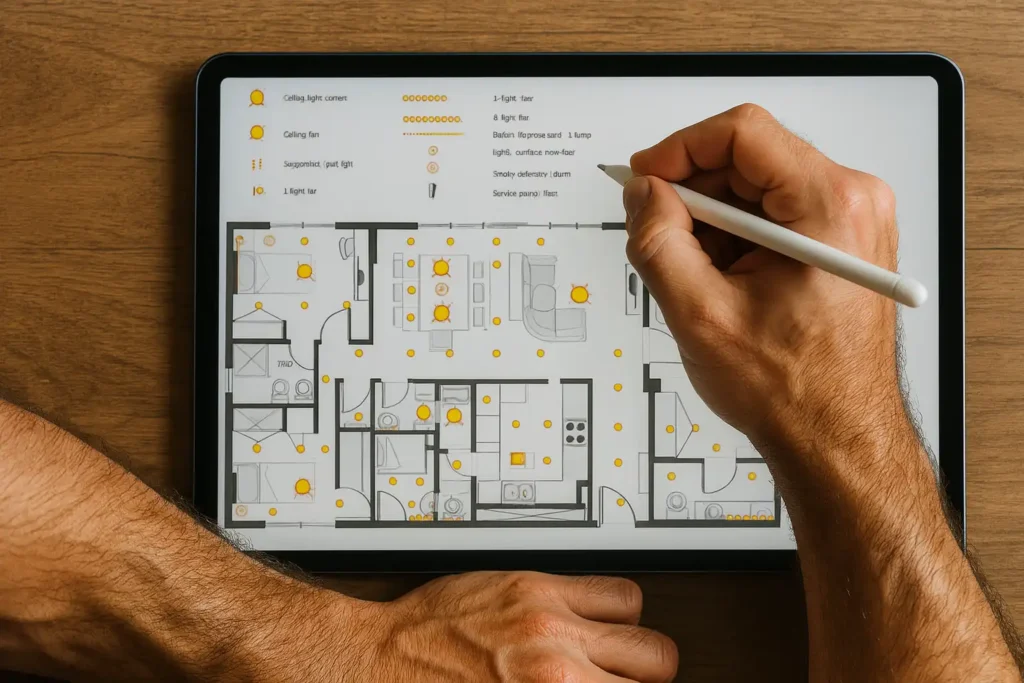
Once all design decisions are made, the final lighting plan is created—a technical drawing that consolidates every detail of the project.
This document specifies the selected fixtures, quantities, mounting heights, beam angles, lamp counts, electrical loads, and any automation systems.
Clarity and precision are essential, since this plan will serve as the blueprint for the electrical installation team.
To draft it, designers often rely on professional software such as AutoCAD, Revit, or SketchUp, which help minimize errors and allow quick adjustments without jeopardizing the overall project.
With these tools, the likelihood of errors is reduced, and any adjustments can be resolved quickly without compromising the entire project.
After approval, the plan moves into execution: electricians and installers follow it to lay wiring, mount fixtures, and integrate control systems exactly as specified.
Ideally, the designer should supervise or provide guidance during installation to ensure the project remains faithful to the original vision.
In the end, the lighting design project comes to life, transforming drawings on paper into spaces illuminated with strategy, atmosphere, and precision.
Lighting trends for 2025
Just like fashion and interior design, lighting evolves every year—driven by new technologies and changing aesthetics.
For 2025, four key pillars stand out. Let’s take a look:
Sustainability and energy efficiency
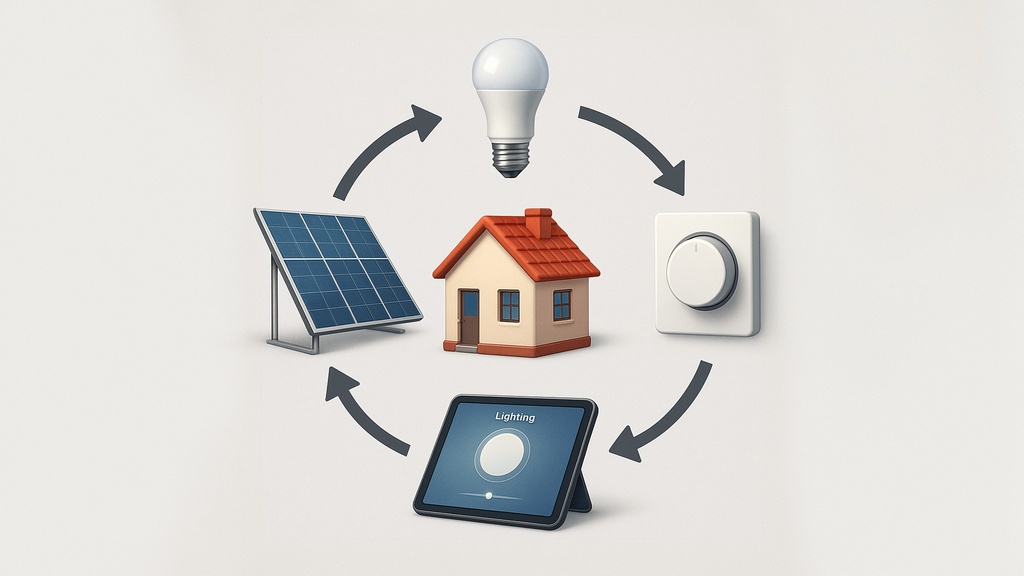
The push for eco-friendly solutions is stronger than ever.
Expect widespread adoption of next-generation LEDs, along with smart systems that adjust brightness automatically, using motion sensors, dimmers, and app-based controls.
Solar-powered and photovoltaic-integrated lighting, as well as fixtures made from sustainable materials, are also on the rise.
The goal: reducing energy use without sacrificing quality or atmosphere.
Smart technology & connected lighting
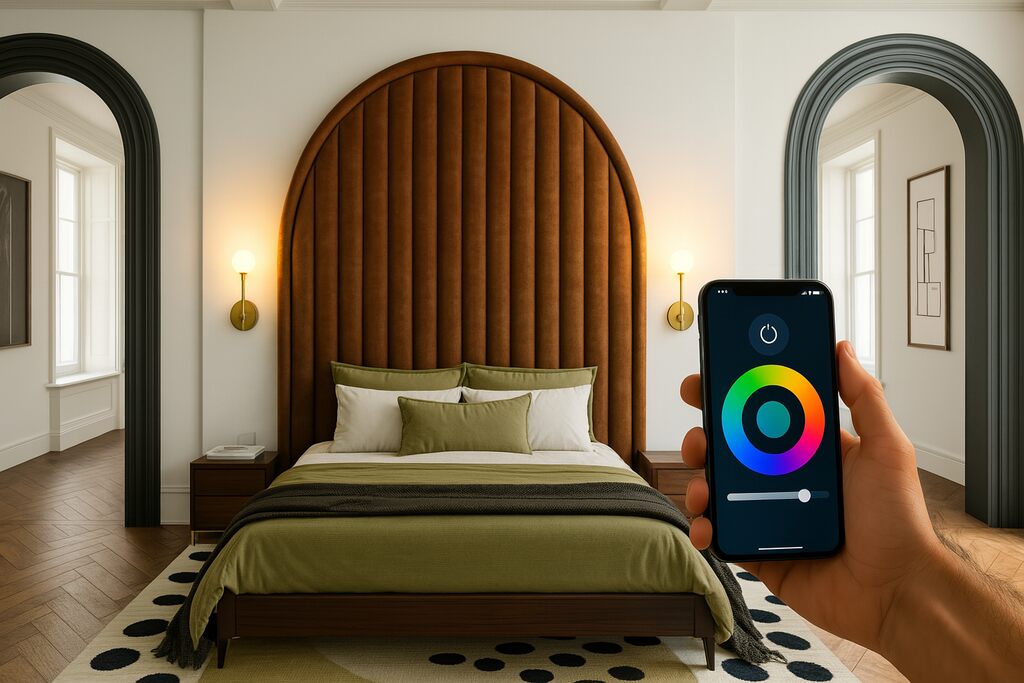
Home and commercial automation is no longer futuristic, it’s mainstream.
In 2025, the integration of lighting with voice assistants, mobile apps, and the Internet of Things is set to grow even further.
With smart systems, users can turn lights on and off, dim them, or even schedule color changes throughout the day, all from their phone.
The result is convenience, customization, and a lighting experience that adapts seamlessly to daily life.
Personalization and well-being
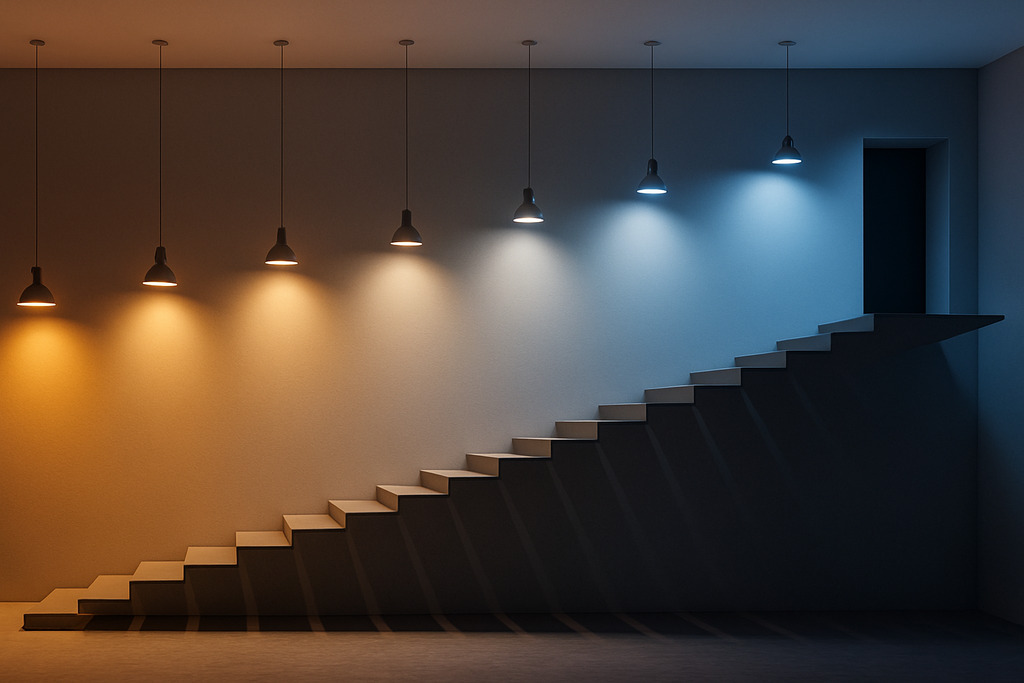
Human-centric lighting has never been more prominent.
This approach highlights the importance of designing lights that adapt to people’s needs and enhance their well-being.
We are talking about fixtures with adjustable color temperature. For instance, cool white during the day to boost alertness, warm white at night to encourage relaxation, in tune with our natural circadian rhythms.
In 2025, there’s a strong emphasis on creating flexible spaces where users can control lighting according to their mood or activity.
The goal is to use light to foster comfort and well-being—through balanced illumination, reduced glare, and the ability to create different atmospheres that suit any moment.
Minimalist and integrated design
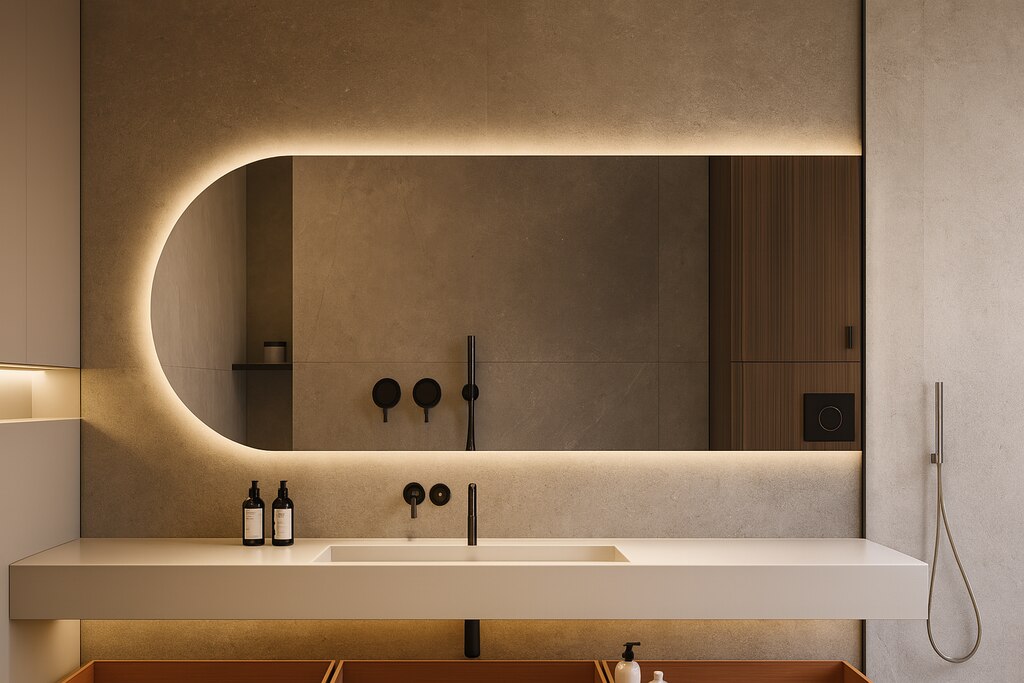
From an aesthetic perspective, minimalist lighting continues to be a strong trend, featuring clean-lined fixtures that are often seamlessly integrated into the architecture.
Recessed LED profiles, illuminated coves, and nearly invisible spotlights put the emphasis on light itself rather than the fixture.
This seamless integration creates a sleek, modern look without any unnecessary elements.
At the same time, decorative pendants and chandeliers with organic, nature-inspired forms are gaining popularity, bringing a subtle touch of personality to the space.
How much does a lighting design project cost?
One of the most common questions when considering a lighting design project is: how much does it cost on average?
The reality is that pricing can vary significantly depending on multiple factors.
To give you an idea, here’s a general pricing table for lighting projects based on the 2025 market:
| Project Type | Description | Estimated Cost |
|---|---|---|
| Single-Family Home | Medium-sized house (living rooms, kitchen, outdoor areas) fully illuminated. | $1,790 – $2,169 |
| Commercial Office | Offices and common areas designed for functional, task-focused lighting. | $35 – $55 per hour |
| Restaurant | Atmosphere-focused lighting across different areas (dining room, bar, etc.). | $5,000 – $25,000 |
| Shopping Center | Large-scale project covering corridors, shops, and architectural highlights. | $3.20 – $4.00 per square foot |
| Outdoor Landscaping | Decorative and energy-efficient garden or façade lighting (LED). | $2,000 – $7,000 |
Note: These figures are broad estimates intended for comparison. Actual project costs will depend on your specific requirements.
That’s why it’s crucial to request detailed quotes and customize the project to fit your budget.
5 facts about lighting
To wrap up our article, here are five lighting facts you should be aware before starting your lighting project:
- Natural sunlight is much stronger than artificial light. The sun can illuminate a space up to fifty times more than a standard light bulb.
- LED bulbs are far more energy-efficient. They consume less power and can last up to 25 times longer than incandescent bulbs.
- Light color temperature can change the feel of a space. Warmer lights, like yellow tones, create a cozy atmosphere, while cooler lights, like blue tones, make spaces feel more modern and energetic.
- Proper lighting can influence mood. Bright lights can make people feel more energized, while softer lighting can help them relax.
- Some bulbs can change color. Many can be controlled via smartphone apps, allowing users to adjust the light color according to their mood or activity.
Enjoyed these facts? They’re extremely useful to help you create a lighting project that aligns perfectly with your client’s preferences.
Want to simplify your lighting design project? Try the Blocks plugin!
Creating a lighting design project can feel complex, with all the calculations and fixture choices involved.
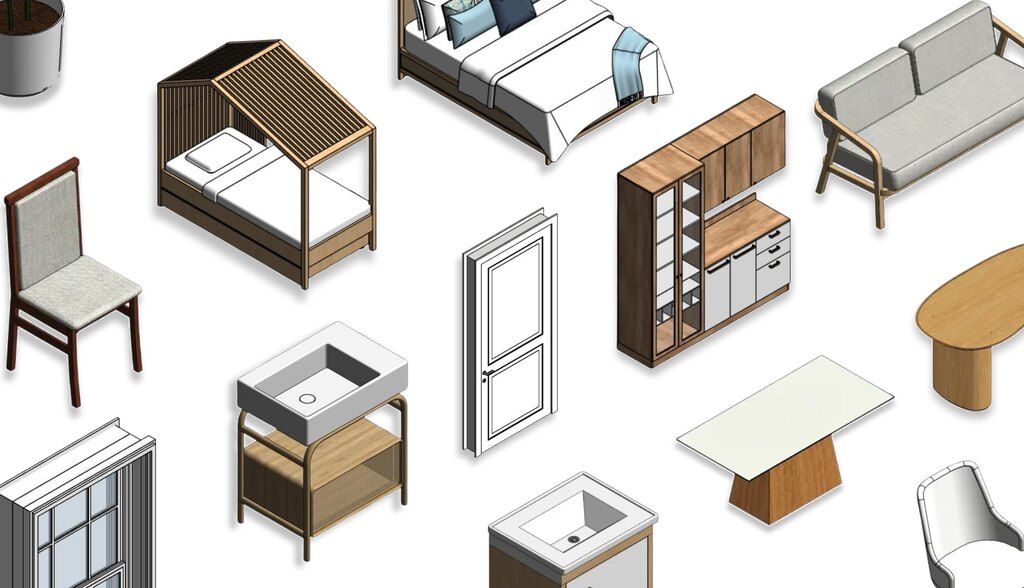
The good news? Modern tools like the Blocks Plugin for Autodesk Revit® make the process seamless for architects, designers, and engineers.
Blocks offers a complete library of over 7,000 parametric BIM families, including a wide range of fixtures for residential, commercial, industrial, and landscape projects.
What used to take hours can now be accomplished in minutes. Download the Blocks Plugin for free and streamline your workflow today!

Conclusion
Here’s the truth: without the right lighting, no architectural project is truly complete. A well-thought-out lighting design complements interior décor and elevates the overall user experience.
Strategically planned lighting not only enhances comfort and mood, but also highlights architectural and design features, and it can even help reduce operational costs.
Keep in mind: every lighting design project is unique, but with the right strategy and a touch of creativity, the result is always a space that’s both beautiful and functional.
Liked this article? For more expert insights, follow the Blocks blog!