
If you, like everyone here at Blocks, live and breathe architecture and design, you know how fast time moves in our industry.
It feels like just yesterday we were discussing 2025 color palettes and, suddenly, we’re already analyzing trends for 2026.
This year brings a compelling mix of contemporary and vintage influences, with calm yet deep and expressive colors.
Today, we’ll explore the aesthetics and concepts set to define 2026. These are styles you already love, now refreshed with new perspectives.
Get ready: the future of architecture and interior design looks exceptional.
What are the interior design trends for 2026?
Interior design in 2026 is largely shaped by the pursuit for refuge and personal identity.
Consumer behavior studies, such as those published by WGSN (a global authority in trend forecasting), indicate that homes are increasingly becoming a “supreme sanctuary.”
In other words, we’ll see fewer showcase spaces and more authentic, livable environments.
1. Warm Minimalism
Forget the cold, clinical, all-white minimalism that dominated the last decade.
The version gaining strong momentum in interior design 2026 is Warm Minimalism.
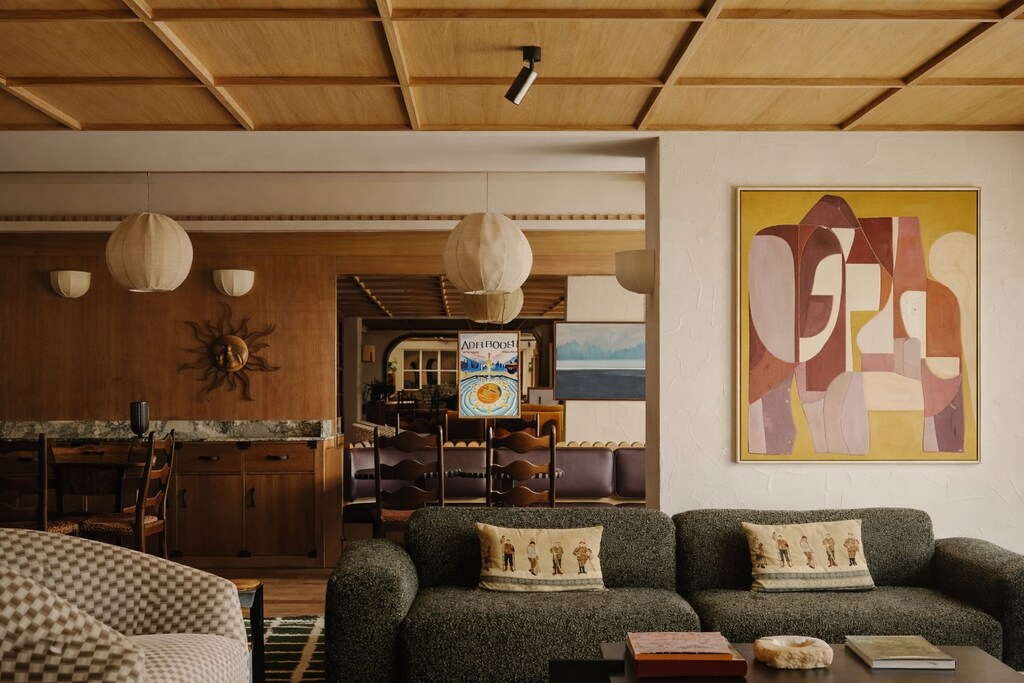
It preserves the “less is more” philosophy, free from excess and visual clutter, but adds soul through rich textures and soft, earthy tones.
Color palettes move away from pure white toward off-white, beige, sand, and warm grays.
Natural materials such as light wood, linen, raw stone, and handcrafted ceramics take center stage.
Furniture embraces organic lines and curves, moving away from rigid right angles.
Low sofas, rounded armchairs, and natural fiber rugs create spaces that invite rest and comfort.
2. Curated maximalism and personal expression
At the opposite end of the spectrum, yet coexisting harmoniously, is maximalism.
In 2026, this trend isn’t about chaos or clutter. It’s about Curated Maximalism.
Think gallery walls mixing classic art with modern posters, shelves filled with books and travel objects, and fearless use of patterns.
The key to avoiding visual overload lies in mastering scale and proportion.
It’s about pairing floral wallpaper with a geometric corduroy sofa while maintaining a cohesive color palette.
For designers, this is a moment to shine through bold specifications.
Interior design 2026 encourages the mix of daring textures: gold-toned metals, colored glass, heavy fabrics, and dark woods.
This style demands confidence and a refined eye to create compositions that feel vibrant yet balanced, truly reflecting the people who live there.
3. Vintage and retro revival
Nostalgia remains a powerful force in interior design 2026.
But unlike previous years, which focused heavily on 1950s Mid-Century Modern, the reference timeline moves forward.
The aesthetics of the 1970s, and surprisingly the 1980s, return in full force, bringing funky, playful, and bold energy to contemporary interiors.
We’re seeing the comeback of chrome tubular furniture, low modular sofas (Togo-style), smoked glass, and lacquered surfaces.
The approach, however, is modern: instead of recreating a period set, designers introduce vintage pieces into contemporary spaces.
Beyond aesthetics, this movement fuels the second-hand and upcycling markets.
4. Neotraditional and updated classic
If you follow the success of period dramas and the “Old Money” aesthetic on social media, you know exactly what this is about.
Neotraditional style responds to a desire for permanence and tradition in an increasingly volatile world.
In interior design 2026, it brings back the elegance of moldings, paneling, tall baseboards, and noble materials but, with a lighter, updated feel.
The architectural shell is classic, while furniture and artwork can be contemporary.
Marble with bold veining, dark woods like walnut, and fabrics such as silk and velvet are essential.
For architects, the challenge lies in precisely detailing millwork and finishes precisely.
The luxury of this style lives in construction details that evoke timeless sophistication.
5. Emotional design and personalized spaces
More than a visual trend, Emotional Design becomes a core design methodology in 2026.
With the rise of remote work and the redefinition of home, people want to see their identities reflected in their spaces.
Generic, hotel-like interiors no longer satisfy the human need for belonging.
Here, the architect or designer acts almost as a curator of memories.
Projects should include display niches for collections, lighting that highlights sentimental objects, and layouts that support each client’s specific lifestyle.
There are no rigid rules. The right solution is whatever makes the resident happy, whether it’s a reading nook, an open kitchen for entertaining, or a hobby studio integrated into the living room.
Customization extends to finishes: custom-mixed paints, bespoke millwork, and handcrafted elements.
Luxury, in this context, means owning a home that no one else has, because it reflects who you truly are.
6. Eclecticism and style mixing
The rigidity of pure styles is fading.
Interior design 2026 celebrates Eclecticism, the art of blending different eras, textures, and references into a cohesive whole.
This marks the end of the “matching set” mindset. A Louis XV chair can absolutely coexist with an industrial concrete table, as long as there’s a unifying thread.
Color and repetition of forms are essential tools to create harmony within apparent contrast.
Eclectic spaces evolve over time, welcoming new pieces without losing identity.
It’s a dynamic style, ideal for creative clients who don’t want to feel locked into a single aesthetic.
7. Livable luxury
The concept of luxury has significantly evolved.
Where it once meant fragile materials and untouchable spaces, in interior design 2026, luxury is livable.
We’re talking about premium materials that withstand everyday life, elegance that isn’t afraid of kids, pets, or a spilled glass of wine.
“Quiet Luxury” moves from fashion into interiors. Construction quality, perfect acoustics, circadian lighting automation, and thermal comfort become the real status symbols.
Visually, this translates into clean spaces with authentic materials and impeccable finishes, no logos or excessive shine required.
Practicality is key: concealed kitchens, ultra-resistant sintered stone countertops, and fluid layouts that improve circulation.
The 2026 client wants a beautiful home but, above all, one that works for them.
8. Biophilic design and connection to nature
Biophilic Design goes beyond simply “adding plants” and becomes a structural requirement in interior design 2026.
The connection is deep: maximizing natural light, promoting cross ventilation, and incorporating biomorphic forms into architecture.
Indoor–outdoor living concepts become even more prominent.
Large glass openings, internal winter gardens, and raw materials like stone, bamboo, and untreated wood are essential.
Green walls and kitchen herb gardens remain popular, now integrated organically into millwork design.
Beyond visuals, sensory biophilia gains importance.
Beyond aesthetics, sensory biophilia is taking center stage. The sound of flowing water (such as small indoor fountains), tactile textures that invite touch, and natural aromas are becoming integral elements of interior design.
What are the color trends for 2026?
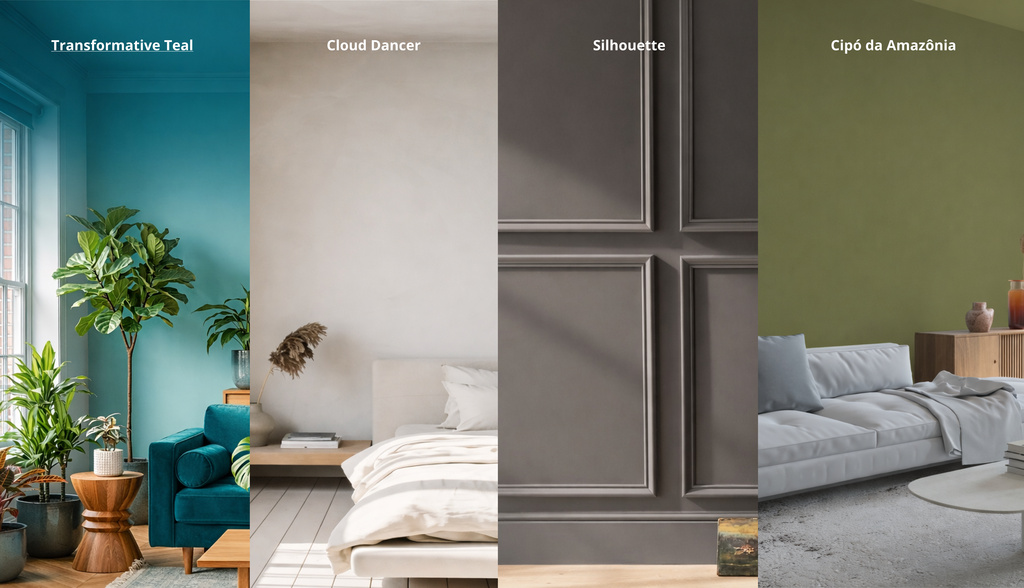
Colors shape the mood of a space, and the palette forecast for 2026 reflects a collective need for healing.
According to color institutes and trend forecasters like Pantone and WGSN, we’ll see a compelling contrast: deep tones on one side and solar, earthy hues on the other.
- Global Pick: The standout is Transformative Teal, a deep blue-green chosen as the Color of the Year 2026, symbolizing balance between constant change and stability.
- “Elevated Whites” and Neutrals: Pantone highlights Cloud Dancer (PANTONE 11-4201), an airy, calming white. Sherwin-Williams names Universal Khaki (SW 6150) as its Color of the Year, a grounded, earthy neutral.
- Sophisticated Darks and Earthy Tones: Benjamin Moore selected Silhouette (AF-655), a complex tone blending burnt umber and charcoal notes. PPG points to Warm Mahogany, a timeless, wood-toned red.
- Natural tones: Suvinil introduces Cipó da Amazônia, an organic yellow-toned green that reinforces a sense of calm, balance and connection to nature, key values shaping interior design trends for 2026.
Unlike previous years dominated by saturated tones or flat grays, the 2026 palette is all about balance.
Your 2026 projects with Blocks
Imagine modeling each of these elements from scratch in Revit. Feeling discouraged already?
We know deadlines won’t wait for perfect modeling.
That’s where Blocks transforms your workflow. To apply interior design 2026 trends today, you need speed and visual quality.
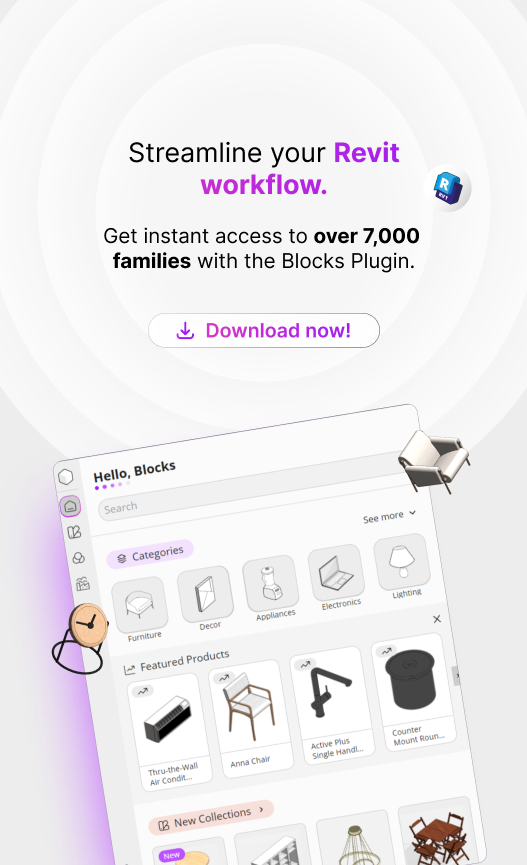
The Blocks Plugin for Revit offers a massive weekly updated library of ready-to-use parametric families.
That curved sofa we mentioned? You’ll find it there. That signature armchair for a vintage space? Also there. Realistic vegetation for biophilic design? All included.
With Blocks, you simply drag and drop the future directly into your project. No more wasting hours searching for broken families online or modeling complex furniture from scratch.

Conclusion
The interior design trends of 2026 explored here, from the comfort of warm minimalism to the boldness of curated maximalism, show that the future of living is deeply human.
As professionals, our mission is to translate these concepts into spaces that inspire and reflect each client’s personality.
We hope this guide inspires your next projects.
Architecture and design never stop evolving and neither does Blocks.
To stay up to date with market insights, Revit tips, and exclusive updates, follow the Blocks Blog and our social channels.
And don’t forget to share this article with your peers.