
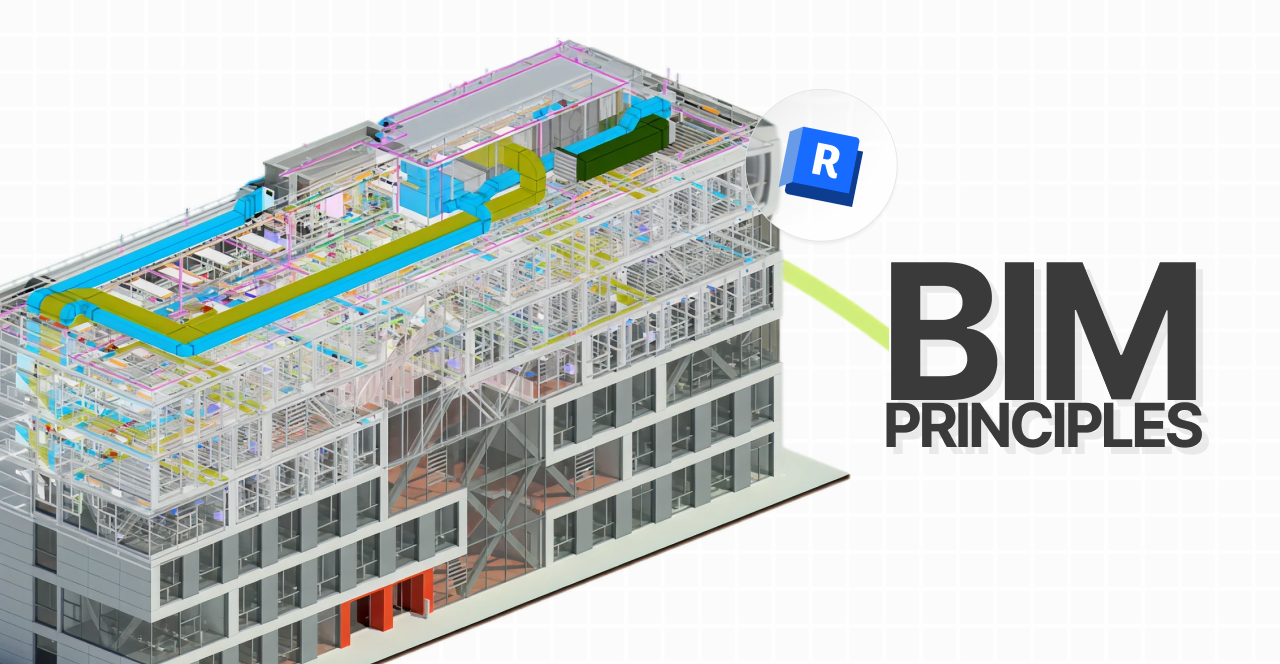
If you already work (or want to work) with BIM, you’ve probably realized that it’s not enough to know how to model well.
You can have a clean-looking file in Revit and still struggle with rework, clashes, and delays. That’s exactly where BIM principles come in.
They are guidelines that structure information and workflow, enabling teams to produce, review, and deliver data consistently.
This is fully aligned with the view of BIM as a process of creating and managing information throughout the asset’s lifecycle, not just as software.
Autodesk, for example, reinforces this distinction by explaining that BIM is the methodology and Revit is a platform that supports that process.
Mastering BIM principles is an essential and strategic skill for professionals in the field, so keep reading to learn more about the methodology and how to apply it.
What is a BIM principle?
A BIM principle is a working rule (formal or agreed upon by the team) that guides how information will be created, named, reviewed, shared, and delivered in a project.
In practice, BIM principles show up in decisions such as: what will be delivered at each stage, how files will be organized, which naming convention will be used, who approves what, and how versions will be controlled.
When this isn’t clearly defined, the team wastes time on questions, rework, and miscommunication.
BIM principles are a topic that connects directly with ISO 19650. The ISO page for ISO 19650-1 describes the standard as a reference for concepts and principles for information management using BIM, including exchange, recording, versioning, and organization throughout the asset’s lifecycle.
In other words, BIM principles are the foundation that supports collaboration. Without them, BIM becomes just 3D modeling. With them, it becomes a reliable information workflow.

Bárbara Pavanello
CEO | Blocks®
“If you work with BIM, don’t underestimate BIM principles, okay? A lot of people think the outcome depends only on modeling well, but in practice that’s not how it works. What really makes the difference is having process, standards, and organization. When you define how the team names files, fills in information, reviews the model, and delivers each stage, you avoid rework, errors, and stress. So my advice is: before you start modeling, align the BIM principles. That saves time, improves communication, and makes your work much more professional.”
Why do they make all the difference?
Because BIM’s value isn’t only in geometry, but in the quality of the information and the ability for multiple people to work from the same baseline with predictability.
That’s why BIM principles make such a difference in day-to-day work. They reduce noise, prevent rework, and improve decision-making.
When a team defines delivery criteria, data standards, and a review routine, it’s not creating bureaucracy, it’s protecting schedule and quality.
Another important point is interoperability. BuildingSMART defines IFC as an open, international, vendor-neutral standard that can be used across different software and platforms.
This reinforces that BIM principles also need to consider data exchange between tools.
So, if you’ve ever received a file that “opens but shows up completely disorganized,” BIM principles were probably missing from the process.
Essential BIM principles
Below, you’ll find BIM principles that make a real difference in practice. They work for students and small teams as well as for firms. The key is to start with clear, useful, and applicable rules.
1. Define what needs to be delivered
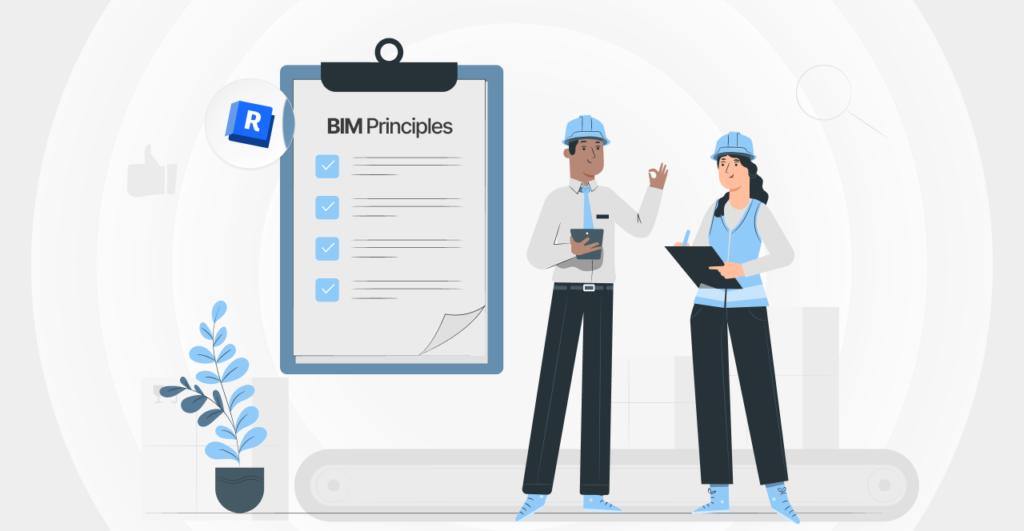
This is one of the most important BIM principles. Before modeling, the team needs to define what will be delivered, for whom, in what format, and with what purpose.
It’s not the same to model for schematic design, coordination, cost estimating, permitting approval, or construction documents.
Each stage requires a specific information scope. When that isn’t defined, teams tend to over-detail where it’s not needed and miss data where it was essential.
2. Plan how the team will deliver
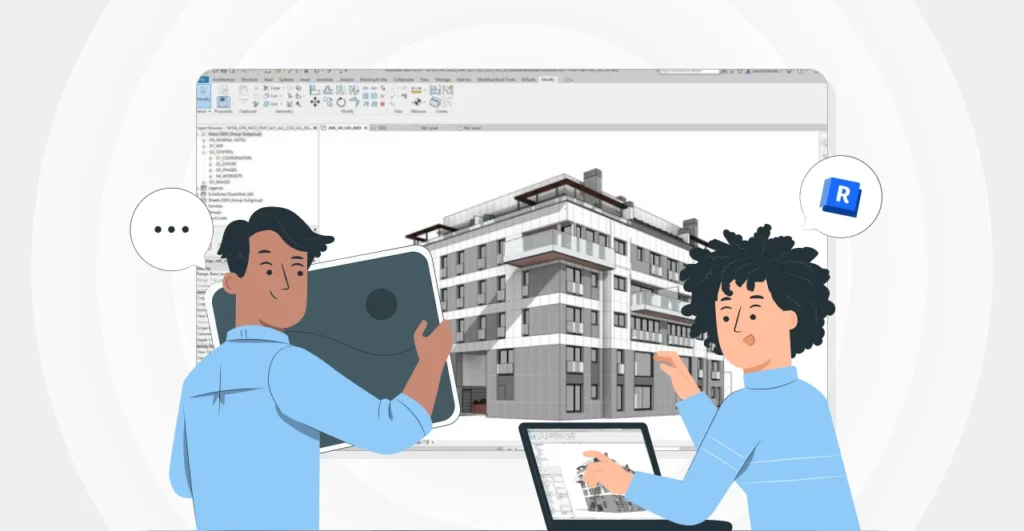
After the “what,” comes the “how.” Among BIM principles, this is the one that turns intentions into process.
This is where responsibilities, production schedule, checkpoints, internal review, and approval flow come in.
Who models? Who reviews? Who publishes? How do we flag pending items? All of this needs to be clear.
It doesn’t have to be a complex plan. A simple, well-agreed routine already improves delivery predictability a lot.
3. Work in an organized environment

BIM without an organized environment turns into chaos fast. That’s why one of the essential BIM principles is defining a clear structure for folders, file statuses, and file sharing.
In information management approaches aligned with ISO 19650, organization and flow control are just as important as the tool itself.
In practice, that means avoiding versions scattered across email, desktop, and messages. When everyone knows where to find the valid information, the project moves forward better.
It may seem basic, but this principle has a huge impact on productivity.
4. Standardize data

BIM principles aren’t limited to the visual model. They also live in the data: parameters, units, categories, classifications, and input criteria.
When each person fills parameters in a different way, schedules, filters, and quantities become unstable. The model may even look organized, but the information loses reliability and BIM without reliable data loses value.
Standardizing data means agreeing on parameter names, input formats, and allowed values. That’s what supports consistency and automation.
5. Define the level of information per stage

Another point that changes the game is defining what level of information makes sense at each phase.
In practical terms: what needs to be represented and informed now, and what comes later.
This principle prevents two common mistakes: detailing too early or delivering critical information too late.
For students and beginner teams, this teaches project maturity: not everything needs to be complete from the start, but everything needs to be appropriate to the stage’s use.
6. Review quality before delivering
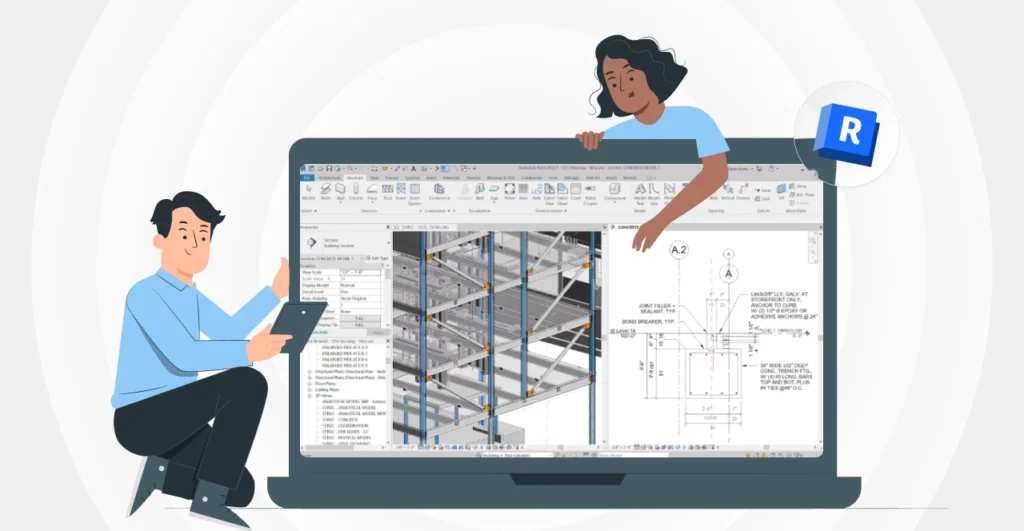
Within BIM principles, quality review isn’t “a quick glance.” It’s creating verifiable criteria before delivery.
This can include checking names, parameters, clashes, views, sheets, links, and the overall consistency of the model.
The benefit is direct: less rework later and more confidence in what was delivered.
Even in small teams, a short checklist makes a difference. What matters is that review is part of the process, not something rushed at the end.
7. Ensure interoperability

Closing the list of BIM principles, we have interoperability.
In the real market, architects, engineers, and consultants often use different software. That’s why thinking about data exchange from the start prevents information loss.
In other words: exchange only works well when BIM principles were defined beforehand.
BIM principles with more speed? That’s Blocks!
If you want to apply BIM principles faster in your day-to-day work and increase productivity inside Revit, come check out the Blocks plugin.
With features designed for those who work in BIM, you reduce repetitive tasks, better organize your workflow, and gain time to focus on what really matters: design and decision-making.
We have a library with more than 8,000 parametric families for you to use however you want in your Revit projects. Download now!

Conclusion
BIM principles aren’t bureaucracy. They are the foundation that makes BIM truly work: with less noise, more clarity, and more consistent deliverables.
When you define delivery criteria, organize the environment, standardize names, versions, and data, review quality, and think about interoperability, the project stops depending on improvisation.
As a professional in the field, you need to understand that mastering BIM principles accelerates the development of your BIM projects.
In the end, mastering BIM principles means mastering the circulation of information in the project. And that impacts results from schematic design to final delivery.
To keep learning about BIM, Revit, and productivity, follow the Blocks blog.